Sector notes
The humanoid robot forecasts are real. The purchase order in 2026 probably isn't one
Goldman Sachs prices the humanoid robot market at $38 billion by 2035; Morgan Stanley goes further, to $5 trillion by 2050. Industrial mobile robots, the unglamorous wheeled kind, are already shipping in the hundreds of thousands and need neither forecast to be right.
Executive summary
547,000
industrial AMRs shipped in 2023, rising to 2.79M by 2030, per ABI Research
$38B
projected humanoid robot market by 2035, per Goldman Sachs
Core conclusions
- Two large, credible forecasts about humanoid robots describe a category still mostly in pilots.
- Industrial AMRs solve a narrower problem and are already shipping at volume; ABI Research's forecast is built on that case being bought today.
- If a 2026 proposal prices a humanoid robot against a payback period inside three years, ask which forecast it's assuming and whether that forecast's own timeline supports the number.
Two very large forecasts are circulating about humanoid robots, and both are worth taking seriously without treating either as a 2026 procurement decision. Goldman Sachs projects the market for humanoid robots could reach US$38 billion by 2035, with annual shipments approaching a million units by the early-to-mid 2030s. Morgan Stanley's own analysis goes further, sizing the market at US$5 trillion by 2050 with more than a billion units in use worldwide by the same date, and puts China's shipments at roughly 50,000 units in 2026 rising to 446,000 by 2030.
Those are analyst projections about a category that is still mostly prototypes and pilot programmes. The category that is already deployable, at volume, has none of the headlines.
Two categories, two different timelines
| Industrial AMRs (wheeled) | Humanoid robots | |
|---|---|---|
| Shipment volume today | 547,000 units shipped in 2023, per ABI Research | Low hundreds to low thousands globally, mostly pilots |
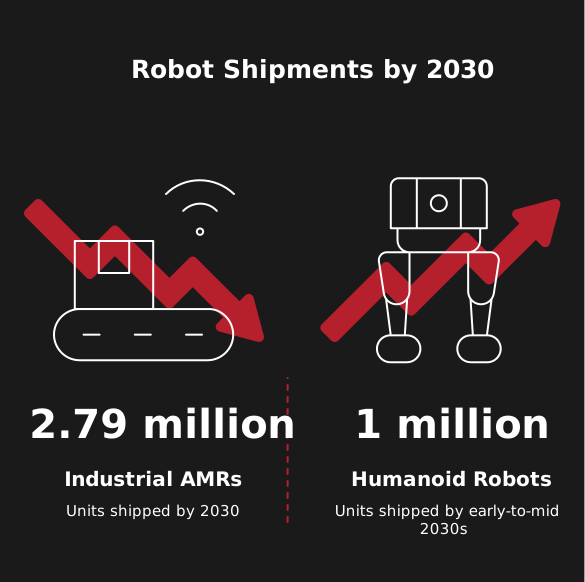
| Forecast trajectory | 2.79 million units by 2030, a 24.1% CAGR, per ABI Research | Roughly a million units a year by the early-to-mid 2030s, per Goldman Sachs |
| Market size | US$33 billion (2026) rising to US$68.9 billion by 2030, per ABI Research | US$38 billion by 2035 (Goldman Sachs); US$5 trillion by 2050 (Morgan Stanley) |
| Task profile that pays back now | Fixed or semi-fixed paths: picking, transport, inspection | General-purpose manipulation in unstructured environments, the harder, less proven case |
Why the wheeled category wins the next three years
A wheeled AMR solves a narrower problem (moving a payload from one point to another on a floor that mostly stays the same) and narrower problems are where automation reliably pays back first. ABI Research's forecast is built on that narrower case being bought today.
The humanoid case is a bet on general-purpose manipulation becoming reliable and affordable at the same time, which is a harder problem and a longer runway. Nothing above says that bet is wrong. It says the honest planning horizon for it is the 2030s, and that an operator budgeting for autonomy in 2026 or 2027 should be pricing AMRs against a real task. Pricing a humanoid against a forecast is a different exercise.
The checkable version of this argument: if a proposal in front of you this year prices a humanoid robot against a payback period inside three years, ask which of the two forecasts above it is assuming, and whether that forecast's own timeline actually supports the number.