Orion Five EngineeringOrion Five Engineering

10 Jalan Kilang #04-05, Singapore 159410
+65 6100 5505

Singapore · Systems integration / AI workflow automation

The systems that are supposed to talk to each other, wired up so they actually do

Orion Five scopes and builds the integration layer between the equipment you already run and the AI workflows you are being asked to adopt, delivered as a fixed scope project and supported as a managed service.

  • Systems integration
  • AI workflow automation
Skip the intro

Services

Systems integration

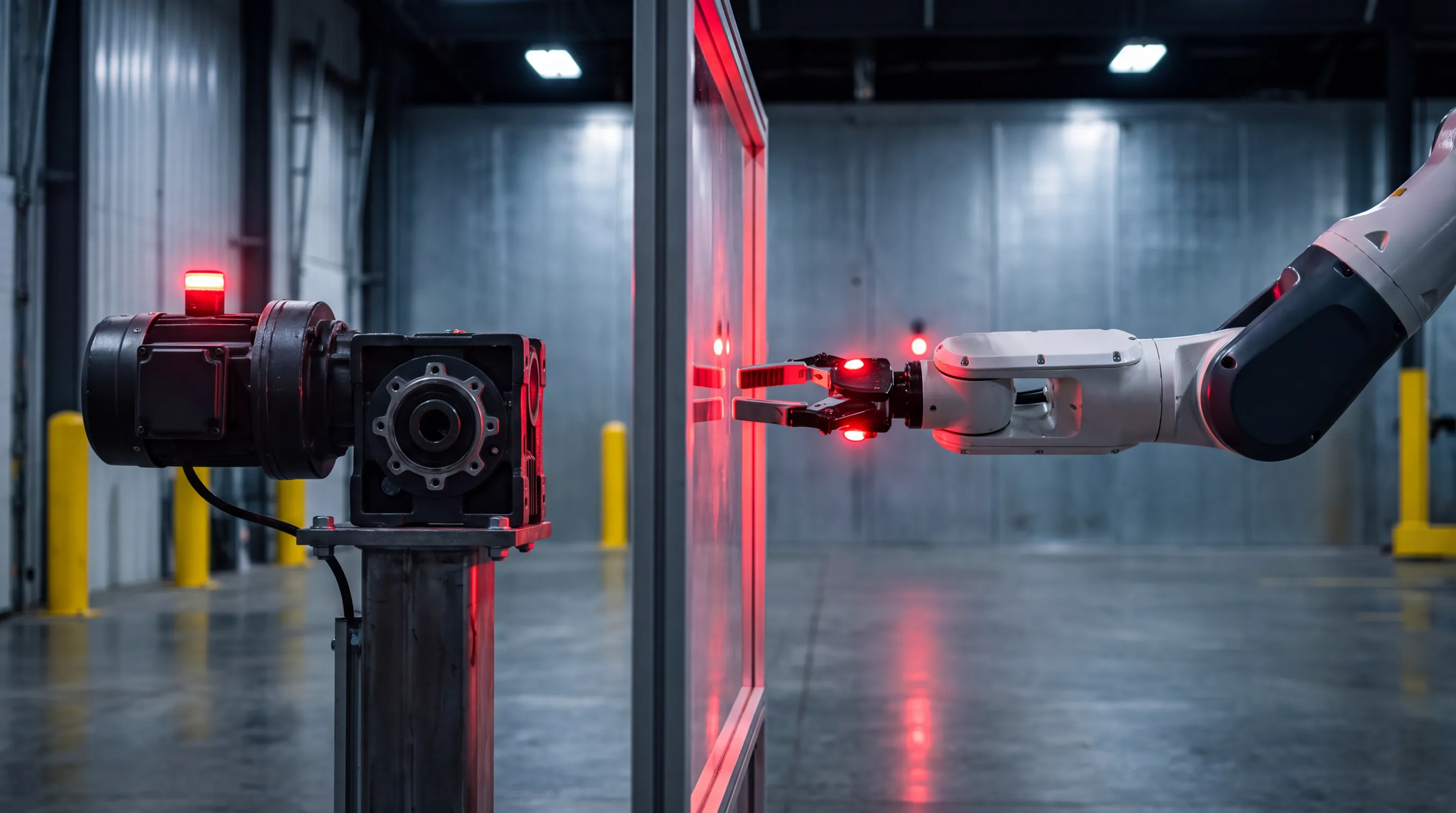
Bringing industrial control, OT, and enterprise systems onto one working layer instead of a stack of point solutions, from feasibility studies through to maintenance and support.

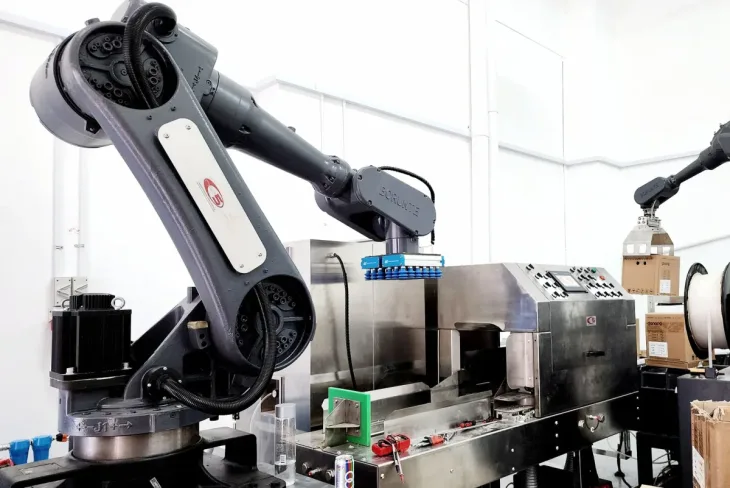
  • Industrial and OT systems integration
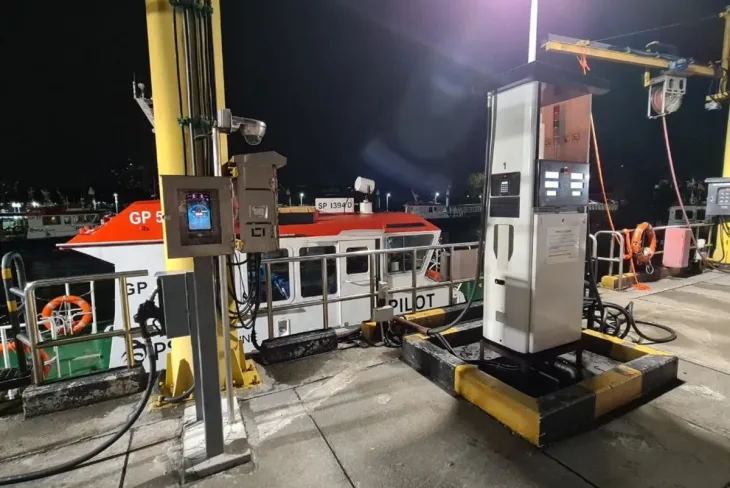
  • Maritime and port systems integration
  • Integrated command centres and video wall systems

AI workflow automation

Applying agentic automation, RPA, computer vision, and predictive maintenance where they remove real operational friction.

  • Process automation and agentic workflows
  • Robotic process automation (RPA)
  • Computer vision applications
  • Predictive maintenance
What each pillar actually involves

Innovation strategy

Deciding what the innovation is for, before deciding what to build

There is no single kind of innovation. Which kind applies to you depends on the stage your company has reached, where it is heading, and what you actually want out of it. Innovation is not necessarily new technology either: most often it is doing a known thing differently, and more effectively, than you did it before.


How much risk sits behind any of these depends on whether you are trying to expand the business or hold current revenue and profit. Most companies are pursuing more than one outcome, which means more than one strategy. Our in-house Registered Management Consultants work that out with you before anything is designed.


How an objective becomes work on the ground

FIG. 01

Two strategies, traced from the financial objective down to the skills that have to exist for it to hold. This is the frame we use to keep a build tied to the outcome it was commissioned for.

Revenue growth

New services and product offerings, and broader sources of revenue from the customers you already have.

Productivity strategy

Better operating efficiency, through lower manpower demand and more effective work on the ground.

Improve returns

Financial

Revenue growth

Broaden revenue mix

Productivity strategy

Improve operating efficiency

Customer

Revenue growth

Increase customer confidence

Productivity strategy

Increase customer satisfaction

Internal

Revenue growth

Understand customer segment

Develop new product

Cross-sell products

Productivity strategy

Reduce manpower

Minimise problems

Effective inspection

Learning and growth

Increase employee productivity

Develop strategic skills

Access to information

SkillsFuture for staff

How we work

What happens after you get in touch

Integration projects fail in the scoping, not in the build. These four stages exist so that the cost, the interfaces, and the failure modes are all on the table before anyone commits to anything.


  1. Site assessment by domain engineers

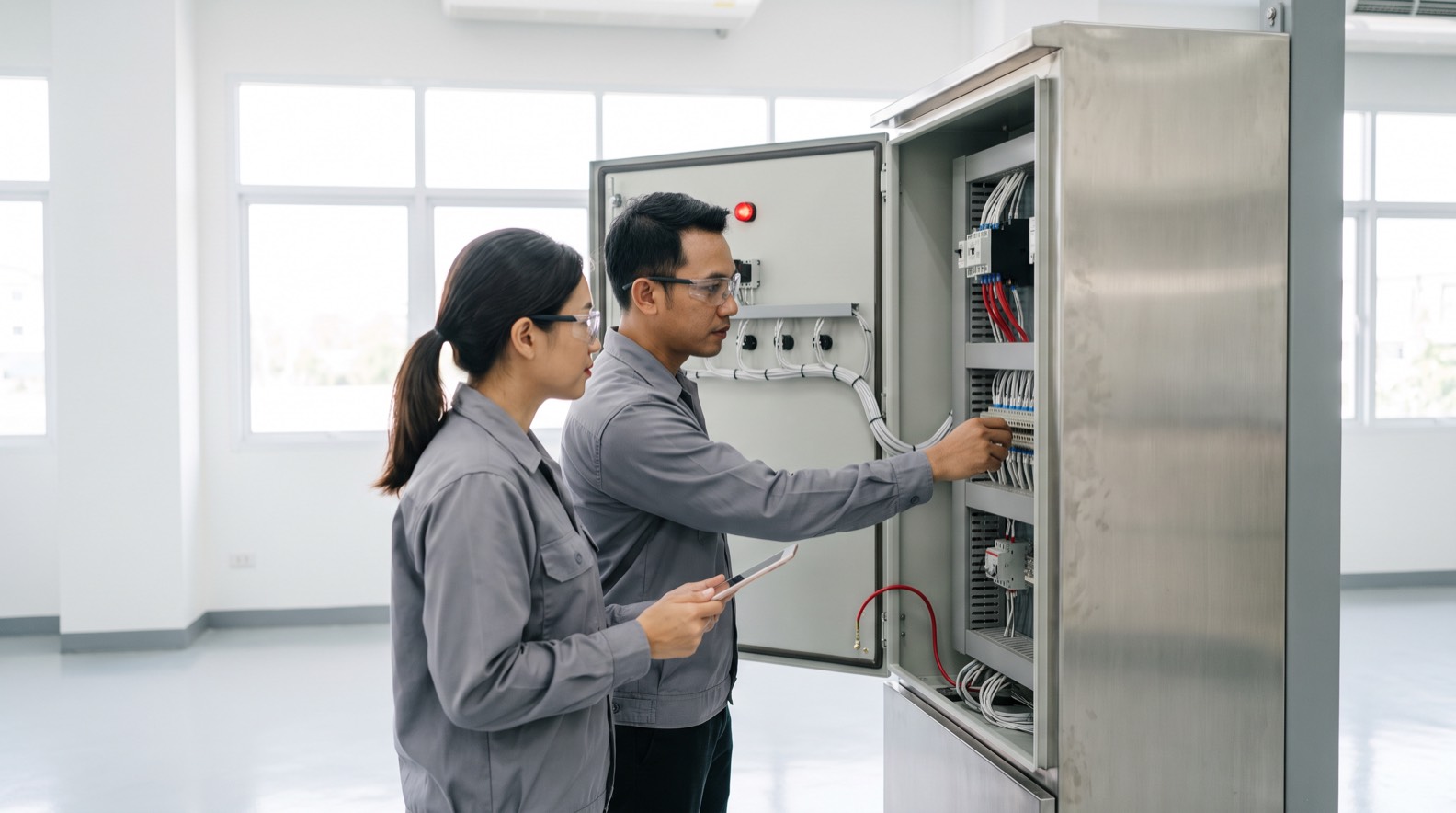
    Our engineers walk the site, map what is actually running rather than what the documentation claims, and find where the process breaks. On plant and port work this usually means tracing signals across equipment that was never designed to talk to anything else.

    A written account of the gaps worth closing.


  2. Preliminary engineering design

    The gaps become a design. Interfaces, data flows, protocol boundaries, and failure modes are specified before anything is priced. Where AI is in scope, this is also where we establish whether the data behind it is good enough to support the decisions it will be asked to make.

    A design that names its own constraints.


  3. Master plan and fixed scope proposal

    A registered management consultant turns the design into a proposal with scope, cost, and sequence set out in full. You see how the outcome will be reached before committing to it, which is the point at which most integration projects are won or lost.

    A proposal you can hold us to.


  4. Delivery and coordination

    On acceptance we run the build: procurement, lead times, shipping and receiving, and production scheduling coordinated against the plan. The same team that scoped the work delivers it, then supports it as a managed service.

    A working system, and someone accountable for it.

Trust is not claimed here. It is documented.

Every project in our case studies is a named client and a delivered system, not a composite. What Orion Five sells today is systems integration and AI workflow automation, backed by a named credential.

International standard

ISO/IEC 42001:2023 Lead Auditor

A newly obtained credential covering responsible AI management systems, governance, and continual improvement, held by our Chief Technology Officer Terence Kok, alongside our Chief Sustainability Officer's existing engineering accreditations: ISO 14064 Lead Auditor and Greenhouse Gas Lead Verifier, QMS ISO Internal Auditor, HACCP Internal Auditor, and FSSC 22000 / ISO 22000:2018 Food Safety Management System.

Consulting standard

Registered Management Consultant

Proposals here are written by a Registered Management Consultant, an Enterprise Singapore recognised certification aligned to TR 43:2015 and SS 680:2021, with the certifying bodies accredited by the Singapore Accreditation Council. Certification is not permanent: it requires continuing professional development and periodic reassessment, and holders are bound by a code of conduct with disciplinary consequences attached.

In a 2021 review, 125 of 148 surveyed SMEs said they felt confident engaging a certified management consultant, and 64 of 88 surveyed consultants said certification added value to their practice.

Veronica Loh

Managing Director and Chief Sustainability Officer

26 years across logistics, food technology research, and the digitalisation of manufacturing and logistics operations, leading multidisciplinary integrated projects for government and private sector clients.

ISO 14064 Lead Auditor and Greenhouse Gas Lead Verifier, QMS ISO Internal Auditor, HACCP Internal Auditor, FSSC 22000 / ISO 22000:2018 Food Safety Management System.

Terence Kok

Chief Technology Officer and Co-Founder

Enterprise AI strategist with 24 years in digital transformation, including 21 years in military strategy applications and deployments across Asia and the Middle East. Delivers complex real-time systems and city-scale technical architecture, covering the full lifecycle of an enterprise system from design through day-to-day operation, on cloud, PaaS, and container platforms. With a team of data scientists and computer engineers, has built generative AI knowledge and review engines that pair multidisciplinary domain expertise with machine learning. Led the 6,000 plus engineer KELIX Platform, with documented efficiency gains of over 20 percent across client deployments. Serves on the IMDA GenAI Sandbox Evaluation Panel and mentors at NUS National GRIP, and is co-authoring AI at Scale: Strategy, Production, and the Human AI Workforce with Iram Tanvir.

ISO/IEC 42001:2023 Lead Auditor, CDO Vision 2026 Award, Google Trailblazer 2024, Registered Management Consultant, ISO 14064 Lead Auditor and Greenhouse Gas Lead Verifier.

Service pillars
Systems integration, AI workflow automation
Sectors in focus
Maritime and port, manufacturing, general SME
Accredited practice
ISO/IEC 42001 Lead Auditor on staff
Recognition
National Day Parade Silver Award, 2019 and 2021
International track record
Technology lead on smart-city master planning spanning DIAL Aerocity, Delhi and Project Raha, Jeddah
Consulting standard
Registered Management Consultant, aligned to TR 43:2015 and SS 680:2021

Contact

Let's scope what you're integrating

Two ways in, no gated content in between. Tell us about the build, or put time on the calendar with an engineer directly.

What do you need