
Case studies
Named clients. Real deployments. Documented outcomes.
Every project below is a completed engagement for a client we can name. Where we cannot show a photograph of the delivered system, the caption says so.
 Orion Five Engineering
Case studies
Every project below is a completed engagement for a client we can name. Where we cannot show a photograph of the delivered system, the caption says so.
What follows is a fraction of the work. Most Orion Five engagements — particularly for government, maritime, and security-sensitive clients — are covered by client confidentiality and cannot be named, detailed, or photographed without that client's agreement. Every project below is one a client has specifically cleared us to publish; where we cannot show a photograph of the delivered system, the caption says so.
PSA Marine
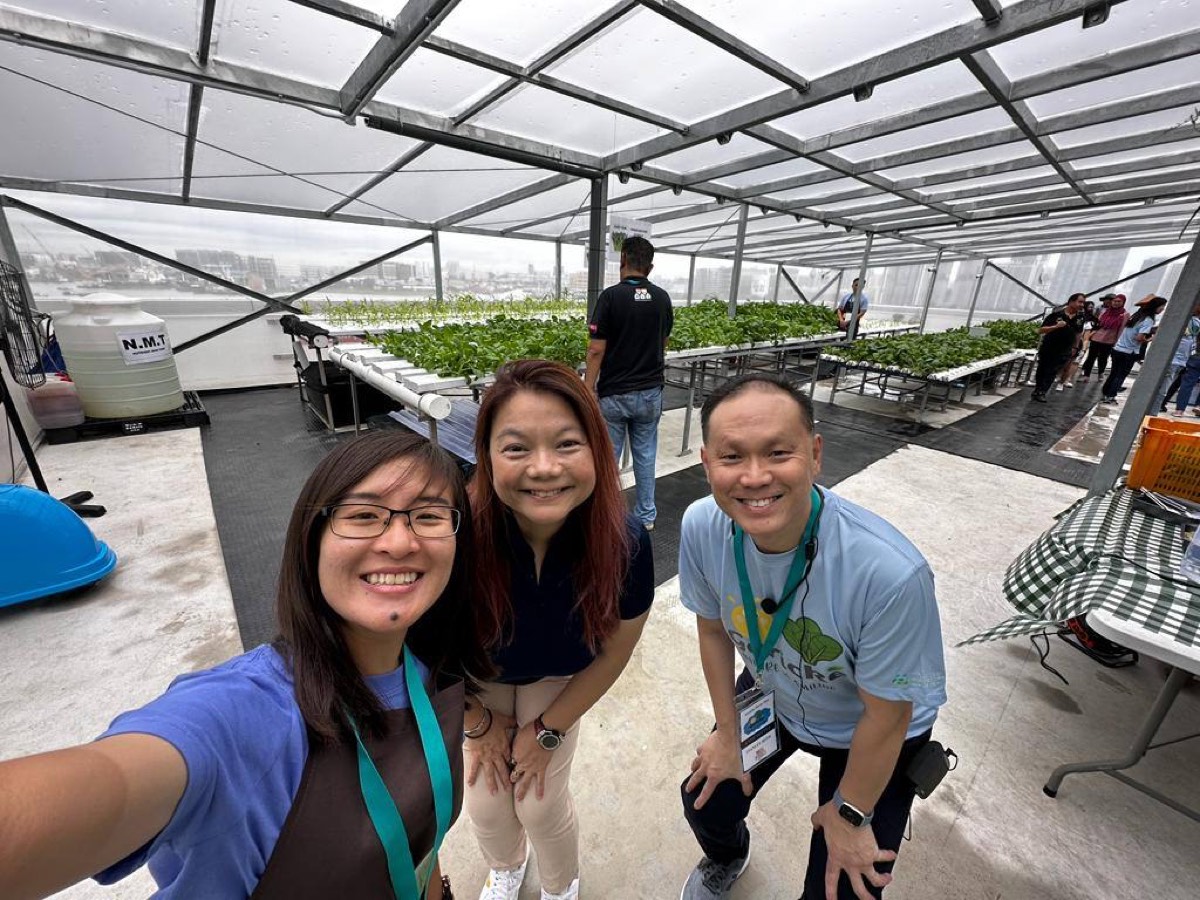
2022An AI-based optimal harvesting alert system built around a Gericke hydroponics installation, matching LUX readings against plant type, water quality, and nutrient levels.
A responsive web application reads sensor values from a dedicated API server and pulls in live camera feeds through an integrated camera SDK, so growers can check every plot from any device. It's built around two user journeys — administrators managing accounts, crop settings, and the plant database, and standard users tracking crop conditions. Developed as part of PSA's sustainability programme.

PSA Marine
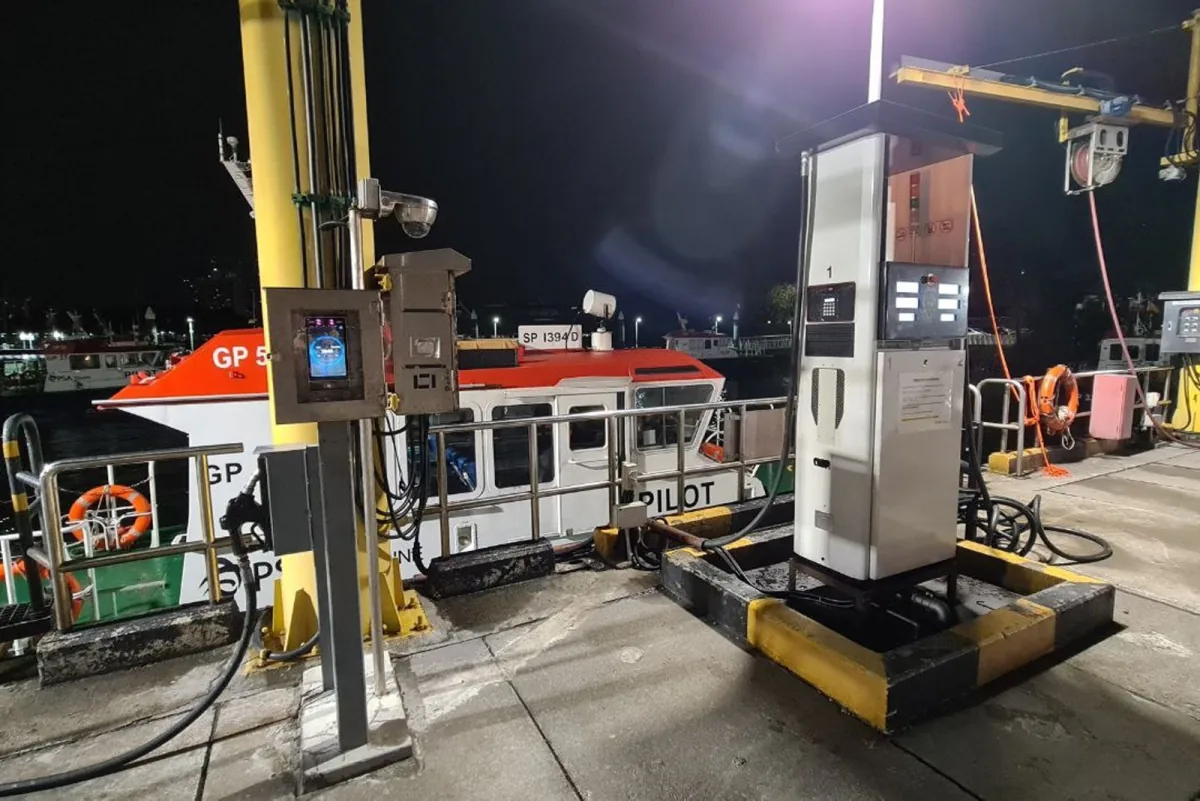
2019 — ongoingA secured, redundant fuel management deployment across fibre optic, WAN, and LTE links, with two-factor fuel bunkering authenticated by facial recognition and 24/7 marine-grade AI surveillance.
Tablet-based facial recognition terminals at both bunkering points interface directly with the Fuel Dispenser System, passing real-time authentication status so fuel only flows once a launch master is verified. Crew clear the second factor from office or remote locations through a dedicated software token.
Firmware integration spanned the fuel dispensers, the fuel management software, and the facial recognition subsystem. The full workload was later migrated to the cloud — assessment, data and application migration, network connectivity, security and compliance, performance tuning, monitoring, and documentation all carried through.
Governance is built into the data layer itself: deactivated accounts and face records purge automatically after six months, fuel transaction reports are retained for five years, access follows least-privilege throughout, and CCTV footage is held for 30 days. The system has run continuously since 2019, and its second refresh was completed in 2025.
“An operationally resilient framework for mission-critical bunkering, integrated across multiple vendors, with maintenance and support carried through afterwards. The objectives were met in full.”

Raymang Eggs Pte Ltd
20241,000%+Efficiency gain
Weekly import shipments used to arrive as pallets of boxed eggs, and unboxing them by hand — against Singapore's tight limits on hiring foreign workers, and repetitive work that wore down local retention — created a bottleneck that drove up chilled storage needs and led to frequent write-offs against short expiry windows. Imported stock also had to come up from cold storage to room temperature before handling, a 4–5 hour, industrial-fan normalisation process per batch that risked condensation and bacterial growth and delayed every delivery.
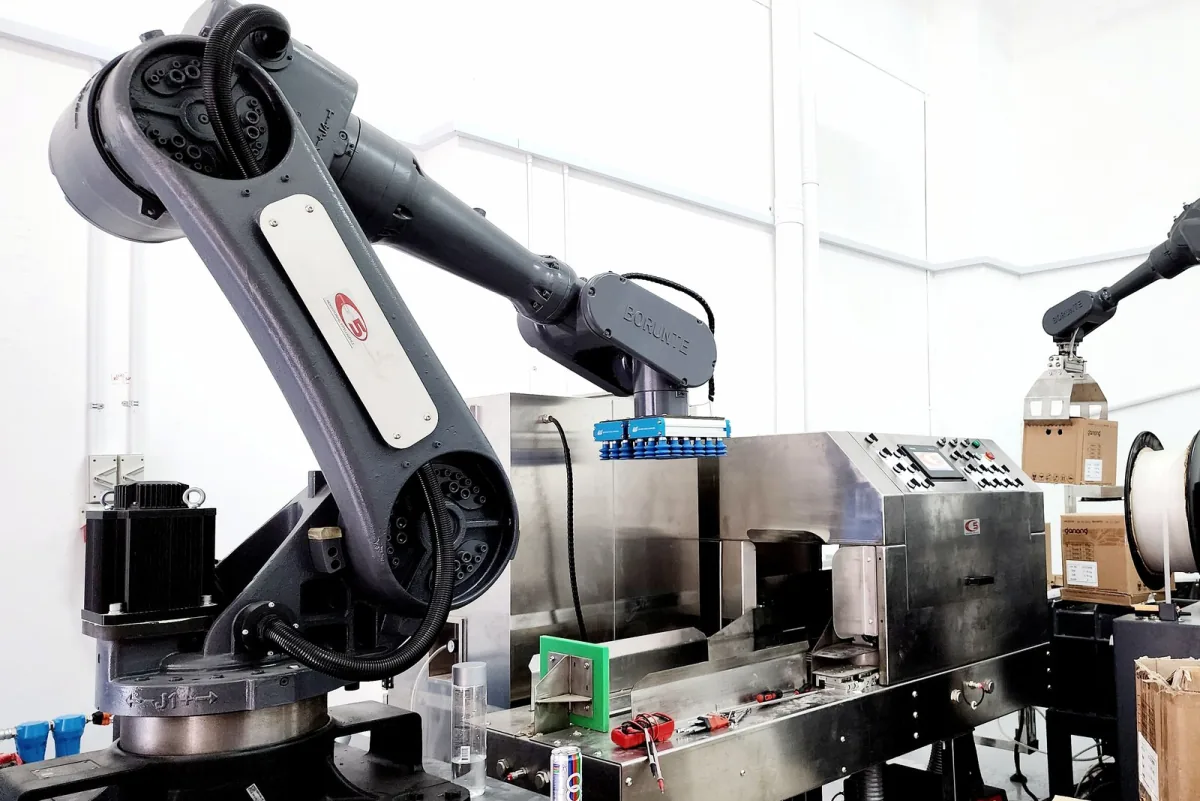
An Enterprise Singapore Enterprise Development Grant-funded robotics line replaced the manual process end to end: a six-axis arm transfers cartons from the pallet onto a conveyor, a mechanical cutter makes precision cuts on all four sides, and the robotic system lifts the top and stages the egg trays for inspection and packing, while a third arm clears and disposes of the cut cartons.
Chilled stock now holds at roughly 4°C and only moves into a climate-controlled, low-humidity room to normalise to about 24°C once it's scheduled for delivery. The result: operational efficiency up by over 1,000 percent, and the process's dependence on manual labour cut accordingly.
“Engaged as consultant and solution provider for our egg unpacking automation project, covering gap assessment, mechanisation design, and Enterprise Development Grant proposal support, through to project management of design, development, and commissioning. The objectives of the project were completed and met.”
AETOS
20211,200 unitsUnits deployed
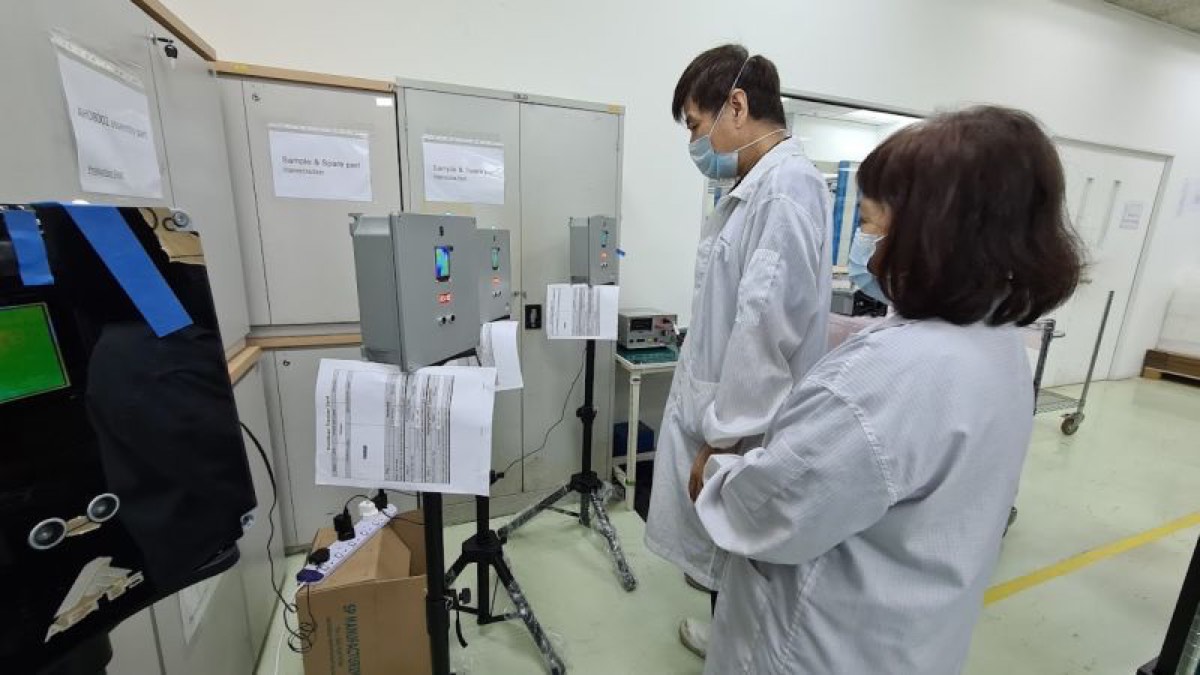
A fully customised scanner built around onboard microprocessor and AI controls, calibrated to plus or minus 0.2°C and reading at 0.9 to 1.0 metres in under two seconds, with a configurable alarm threshold. Over 1,200 units were built and deployed to support pandemic operations, running on either a 20,000 mAh battery pack or mains power.
The unit is listed on the Singapore Medical Device Register as a Class B medical device, registration number DE0506483, under the proprietary name AETOS KoolScan, and was manufactured under ISO 22716:2007.
HSA Class B certification, November 2021
Pharmaceutical packaging client
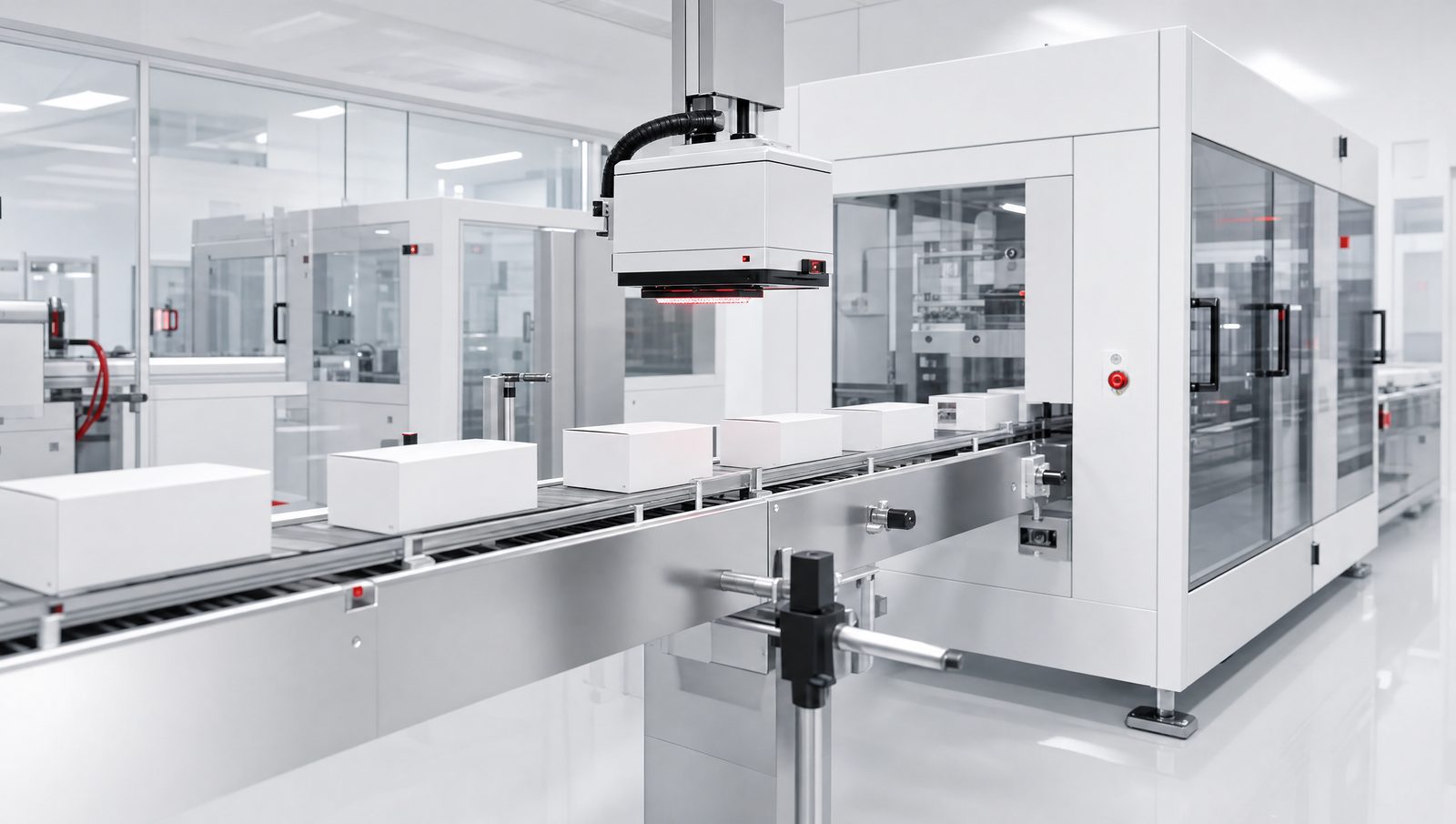
20266,000 samplesTraining samples
A machine-learning vision system trained on roughly 6,000 samples to recognise pill sizes from 5mm to 12.7mm across two pack formats.
Staged inspection screens every pouch for foreign object debris, double pouches, and empty pouches — catching contaminants as fine as chips, sand, and stray debris, at a precision and tolerance built for strict quality standards. Barcode readers identify SKU type and route failures automatically: failed pouches are cut and dropped to one bin, and strips whose pouch count falls outside multiples of ten are diverted to a second.
At final inspection, the system counts ten pouches per strip before cutting and alerts packers once a configured strip quantity is reached. An automatically generated journal logs every entry, completed pack, and instance of raw material wastage for full traceability.

ENGIE
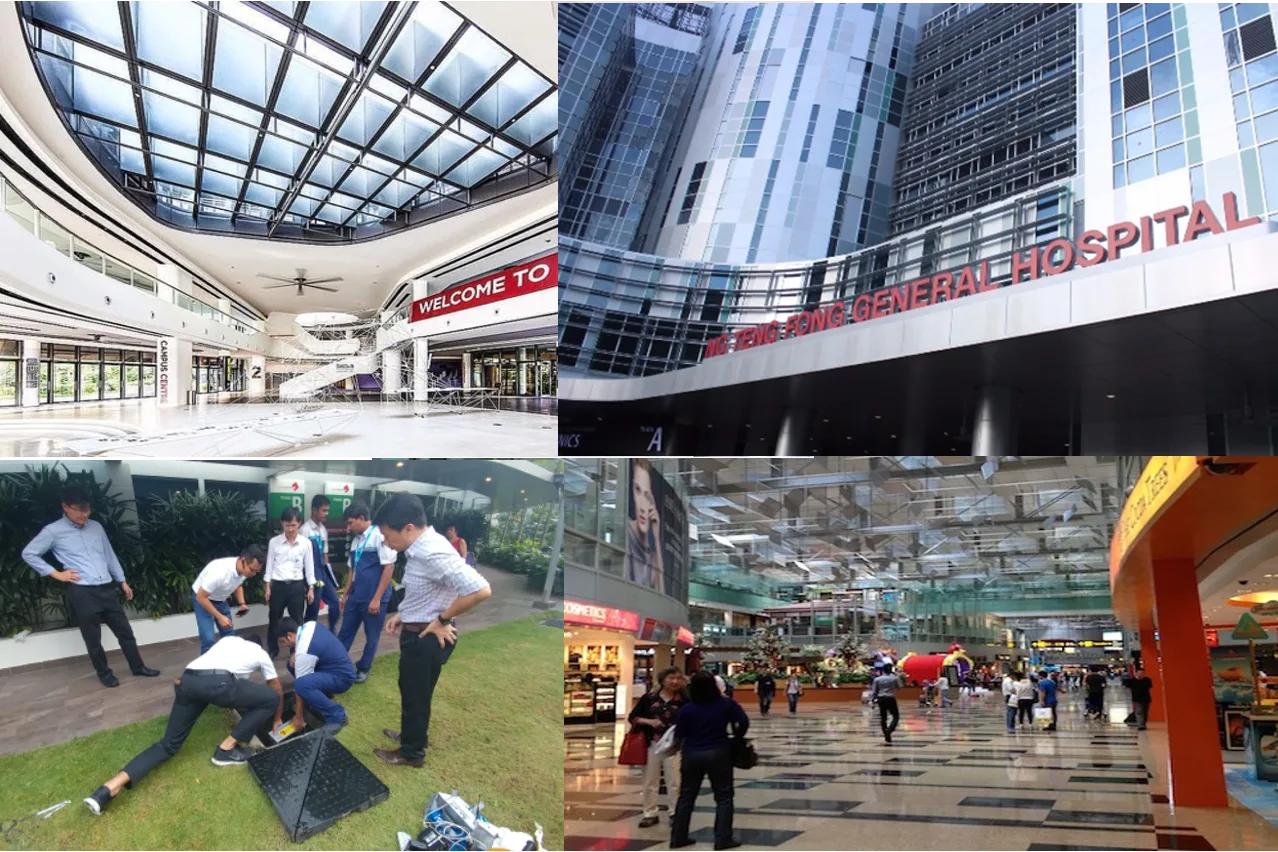
2018An IoT and integrated building management sensor suite feeding real-time environmental data into ENGIE's own digital solutions, deployed at SUTD, Ng Teng Fong Hospital, and Changi Airport to sharpen comfort control and energy efficiency.
PestBusters
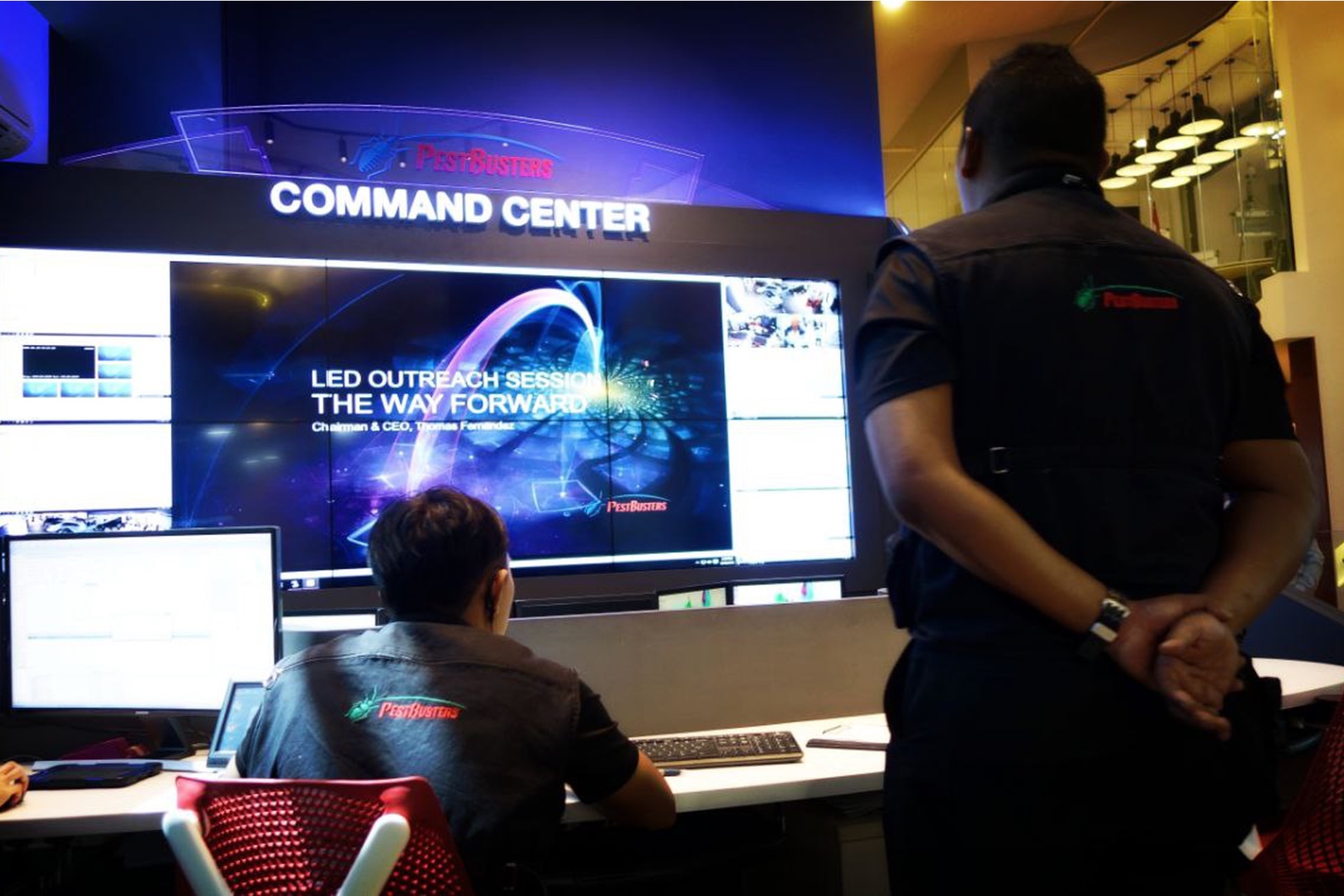
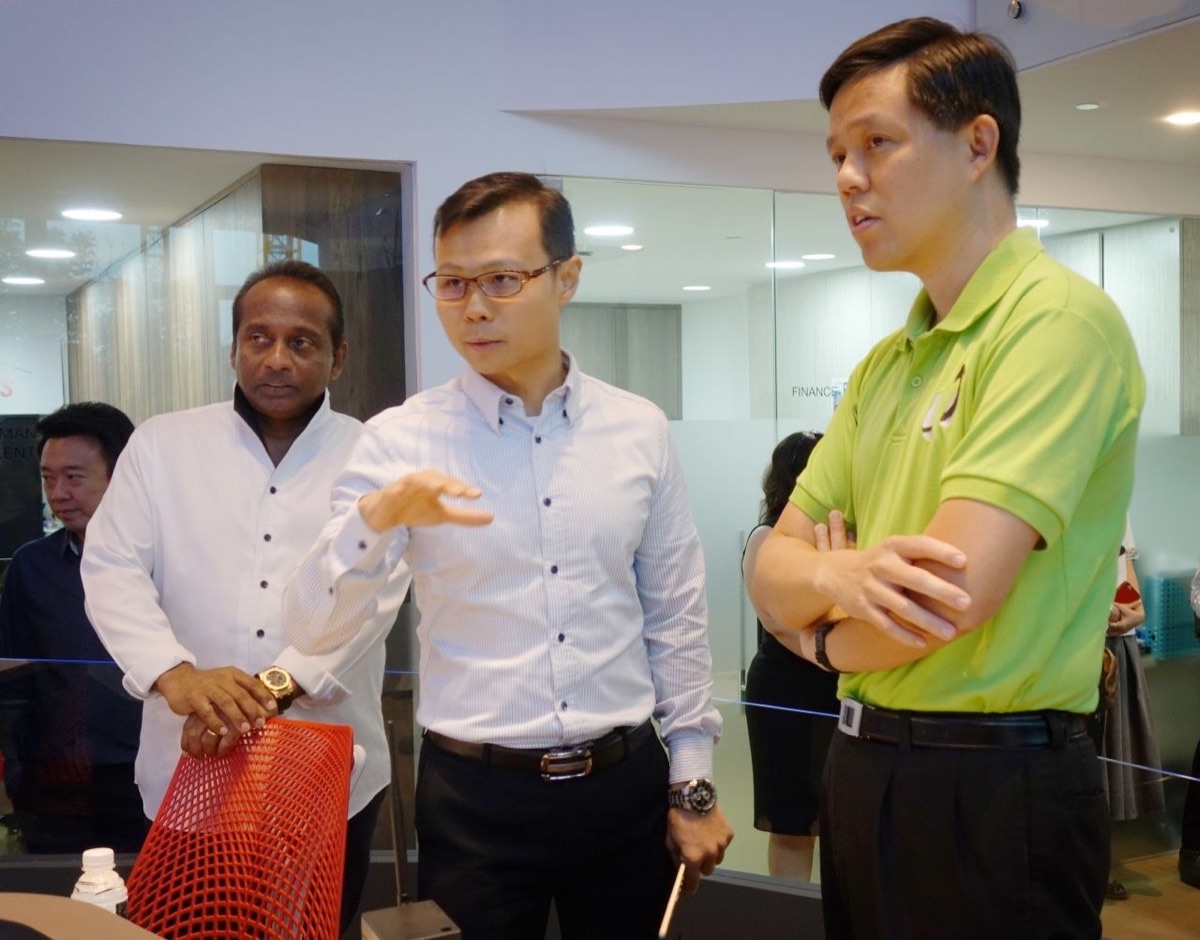
2016 and 2018Singapore's first Lead Enterprise Development Scheme project, addressing a problem that scales badly by hand: every new site adds more bait boxes, glue traps, and cage traps that need routine checking, most of it in hard-to-reach gutters, false ceilings, and high structures, whether or not there's any activity to find.
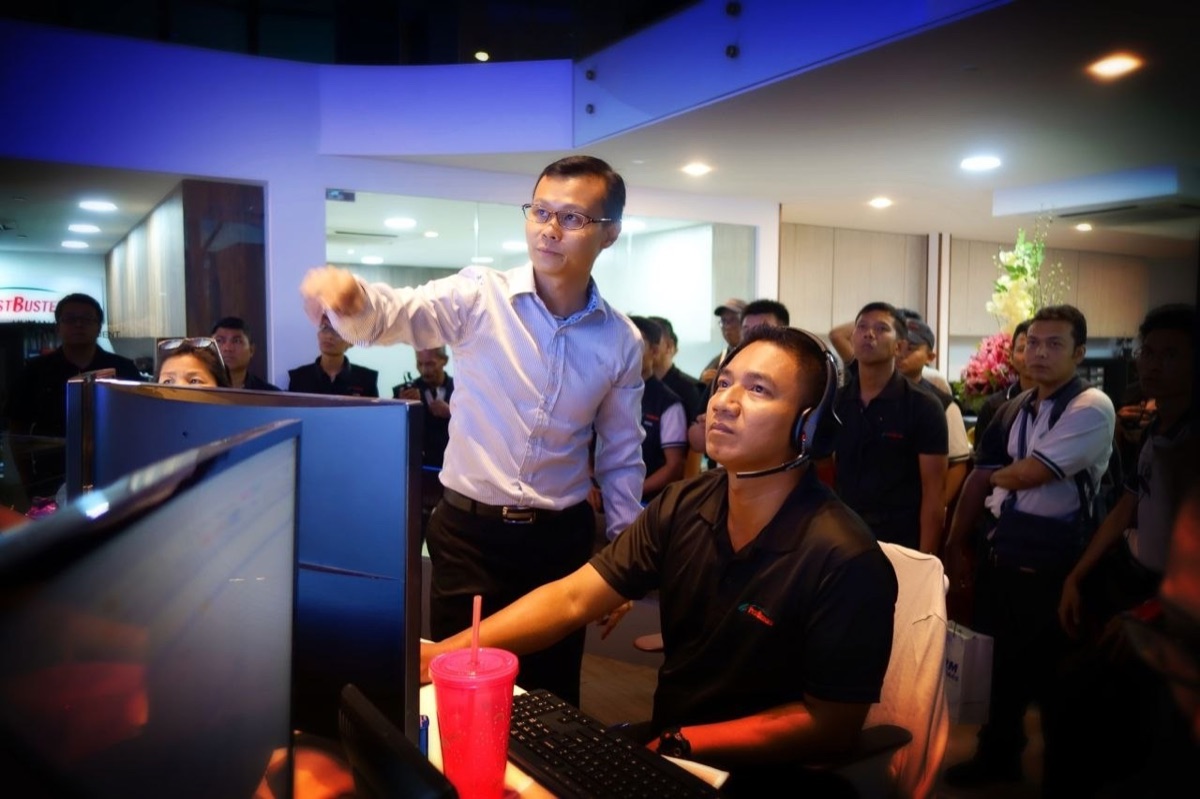
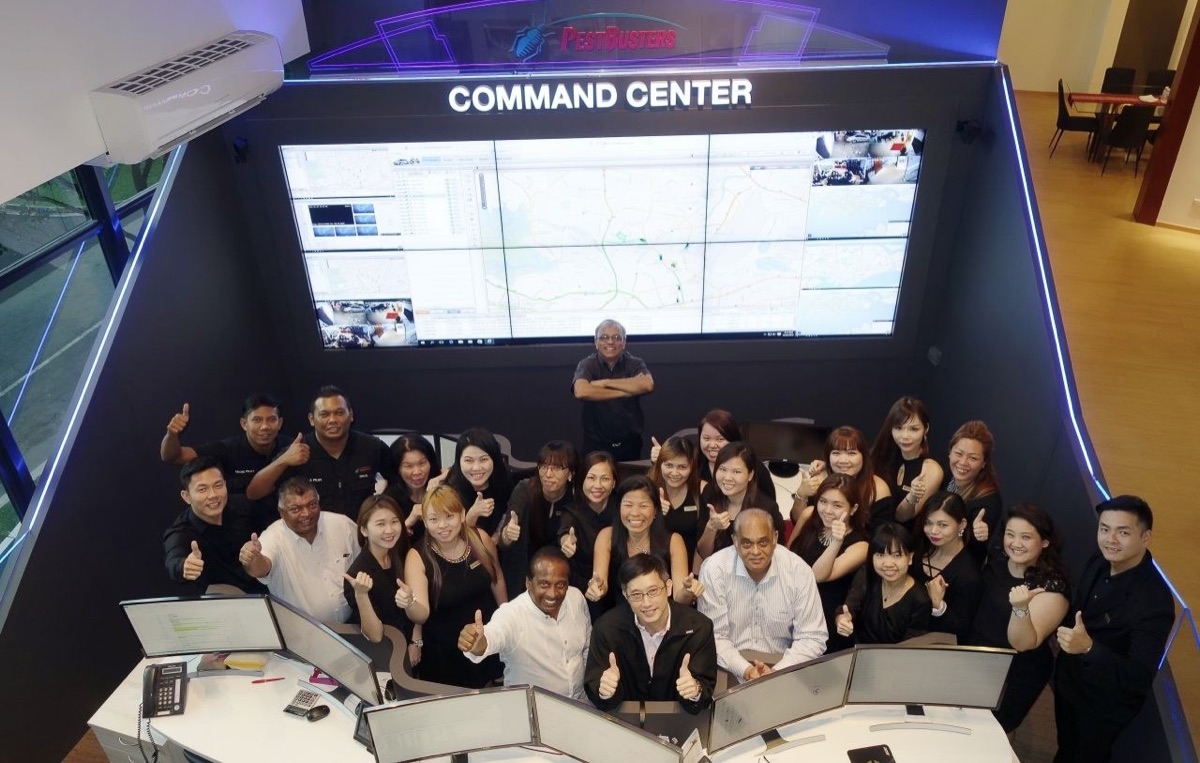
Phase one covered fleet management, live-streaming body cameras, inspection drones, and a command centre. Phase two replaced blind, routine trap-checking with a two-step IoT tracking and elimination system: discreet sensors deployed across a client's premises detect rodent activity in real time, run for a targeted five-plus years on a single battery, and filter out false signals with smart algorithms before pushing activity data to a secure cloud platform, all visualised through PestBusters' own Command Center.
Technicians now respond to confirmed activity rather than patrolling every point on a fixed schedule — turning the service from routine trap-checking into precision rodent risk management.
A third phase was scoped to extend the programme further, but PestBusters was acquired before it began. The two phases above ran across multiple years as a single transformation programme, delivered in full.
A visit by Mr Chan Chun Sing, then Minister in the Prime Minister's Office, 2017
Chye Thiam Maintenance
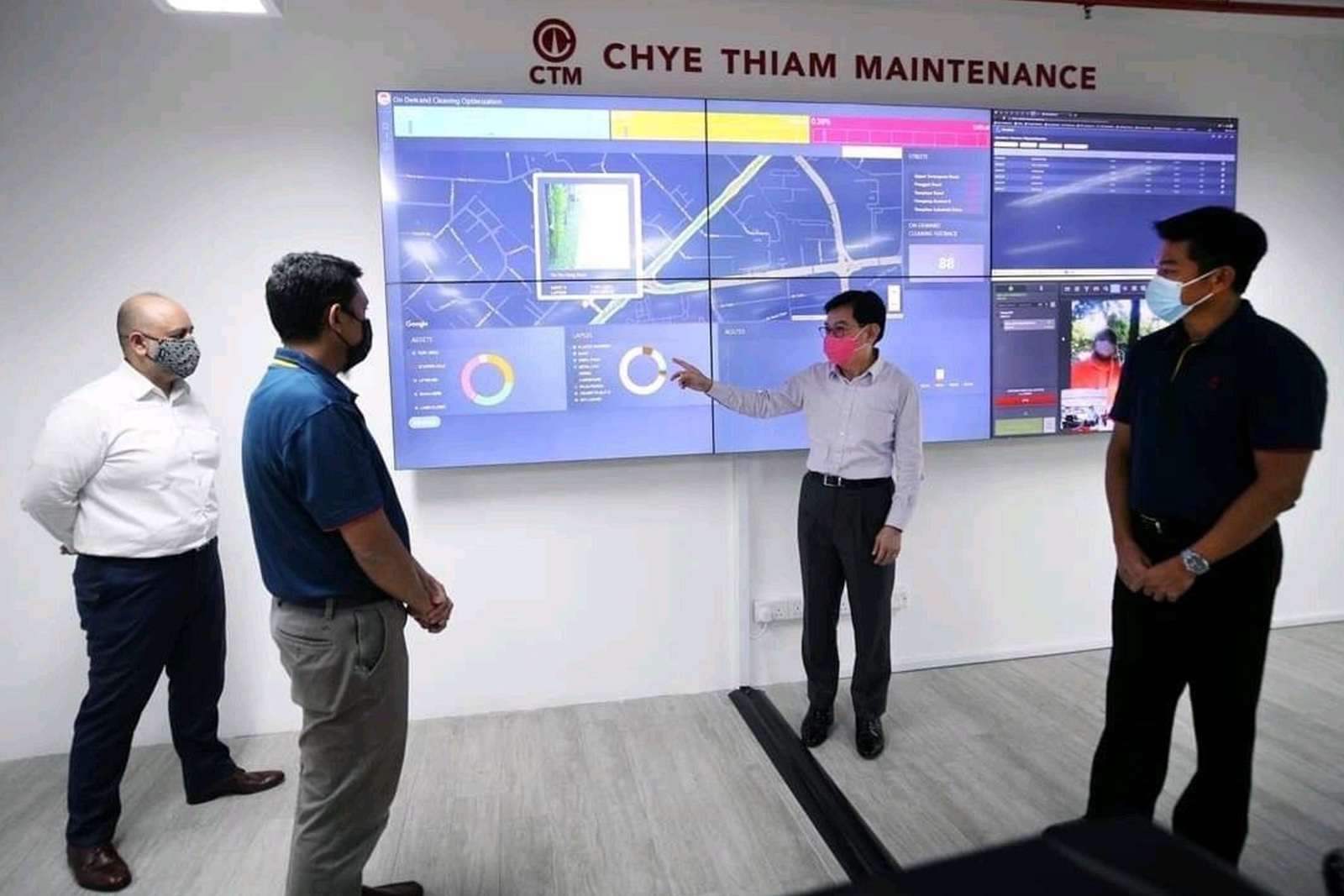
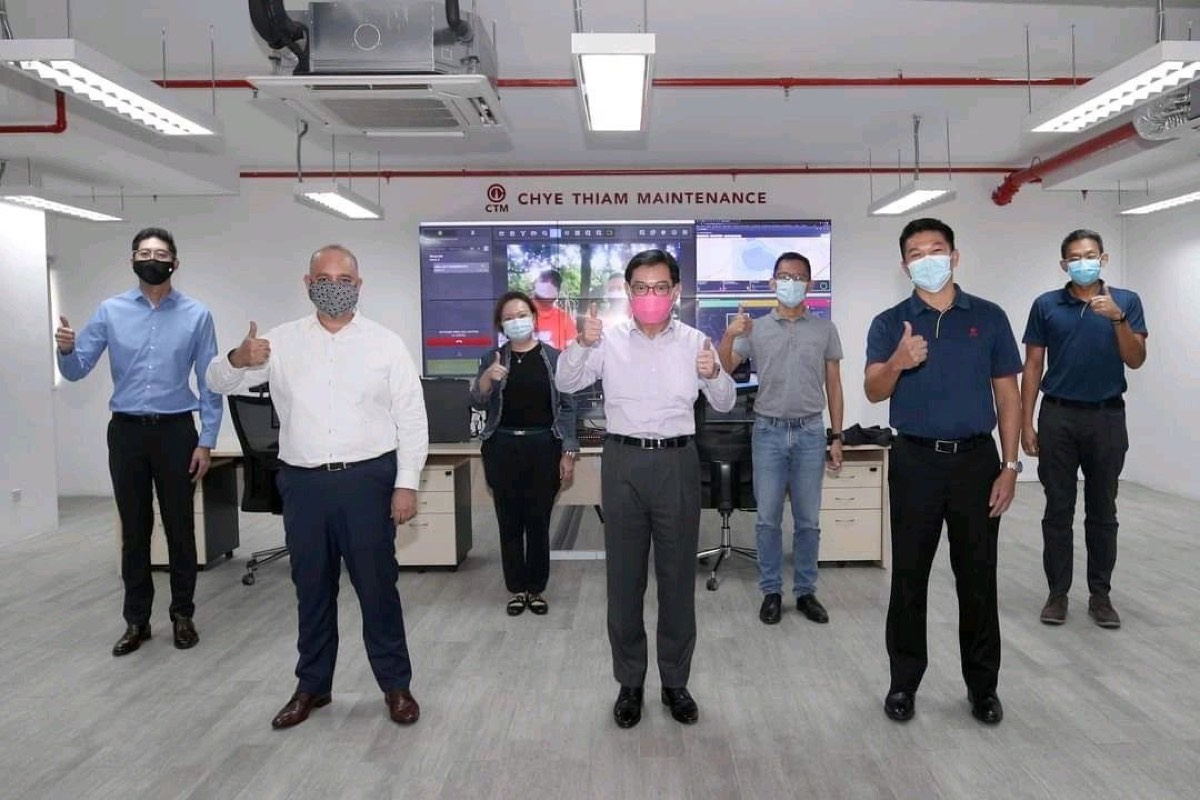
2021A cross-platform unified communications system, T.Flex, built on the TASSTA platform, covering secured mission-critical push-to-talk, messaging, voice recording, and GPS asset tracking for a workforce of 1,800. Live-streaming body cameras and vehicle cameras, including on beach-cleaning vessels, cut down on supervisory travel and let coordinators reroute crews in real time.
Deputy Prime Minister Heng Swee Keat was shown the upgraded system on a site visit in November 2021.
The Deputy Prime Minister's review, November 2021
HAAR
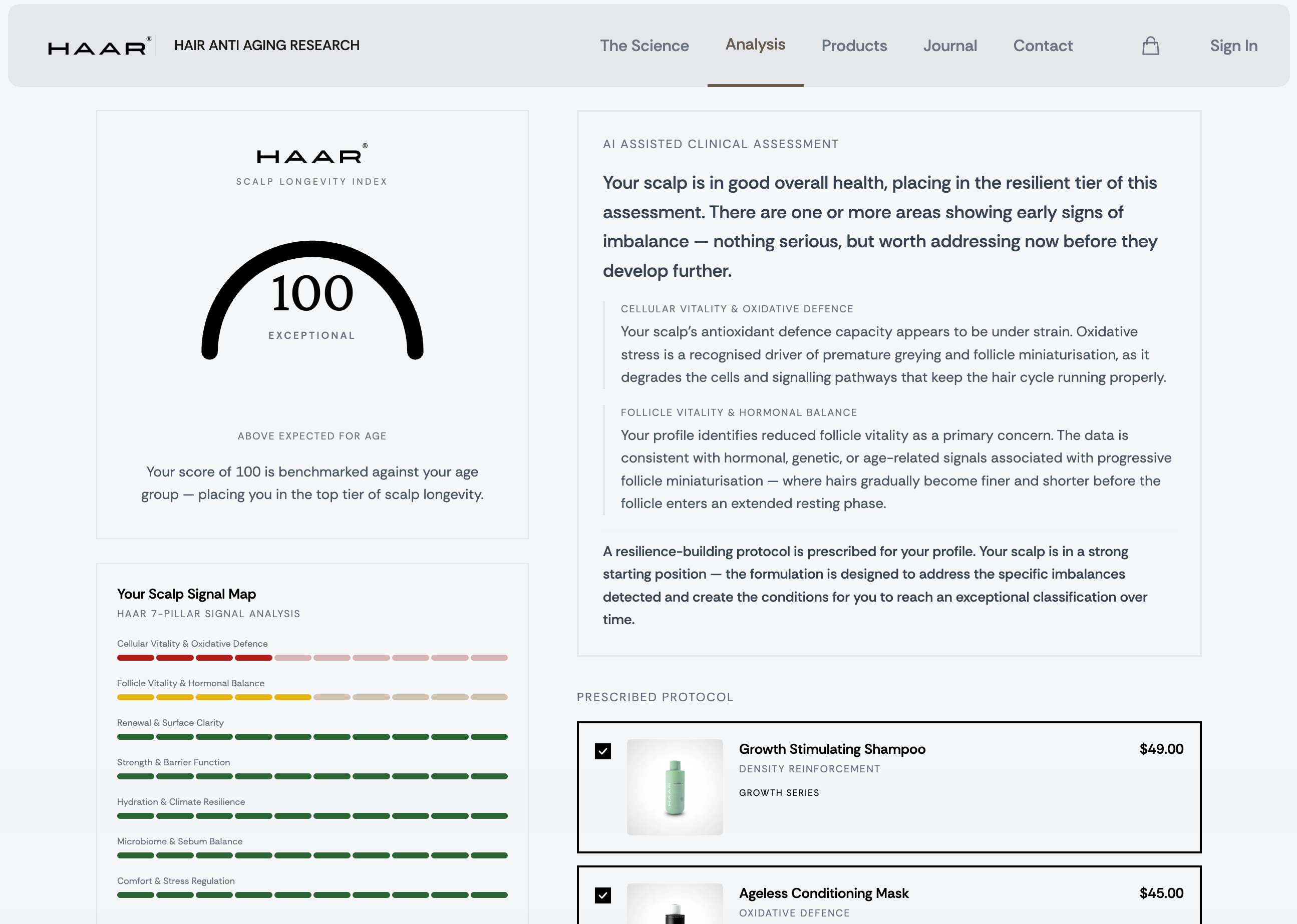
2025 — 2026Built for HAAR, a scalp longevity brand that treats the scalp's biological environment rather than just surface symptoms, the platform runs a full diagnose, treat, and maintain journey: an AI-customised diagnostic engine decodes a customer's scalp biological signature, an adaptive treatment system tailors care to that condition and lifestyle, and a shop of daily scalp longevity products keeps the relationship going.
Stripe powers one-time purchases through a persistent cart, with full user authentication and account management behind it. An admin dashboard handles products, orders, and analytics, and transactional email covers order confirmation, shipping, and password resets end to end.
The site runs responsive across mobile and desktop, on production cloud infrastructure connecting every backend service to the public storefront.


Government Agency
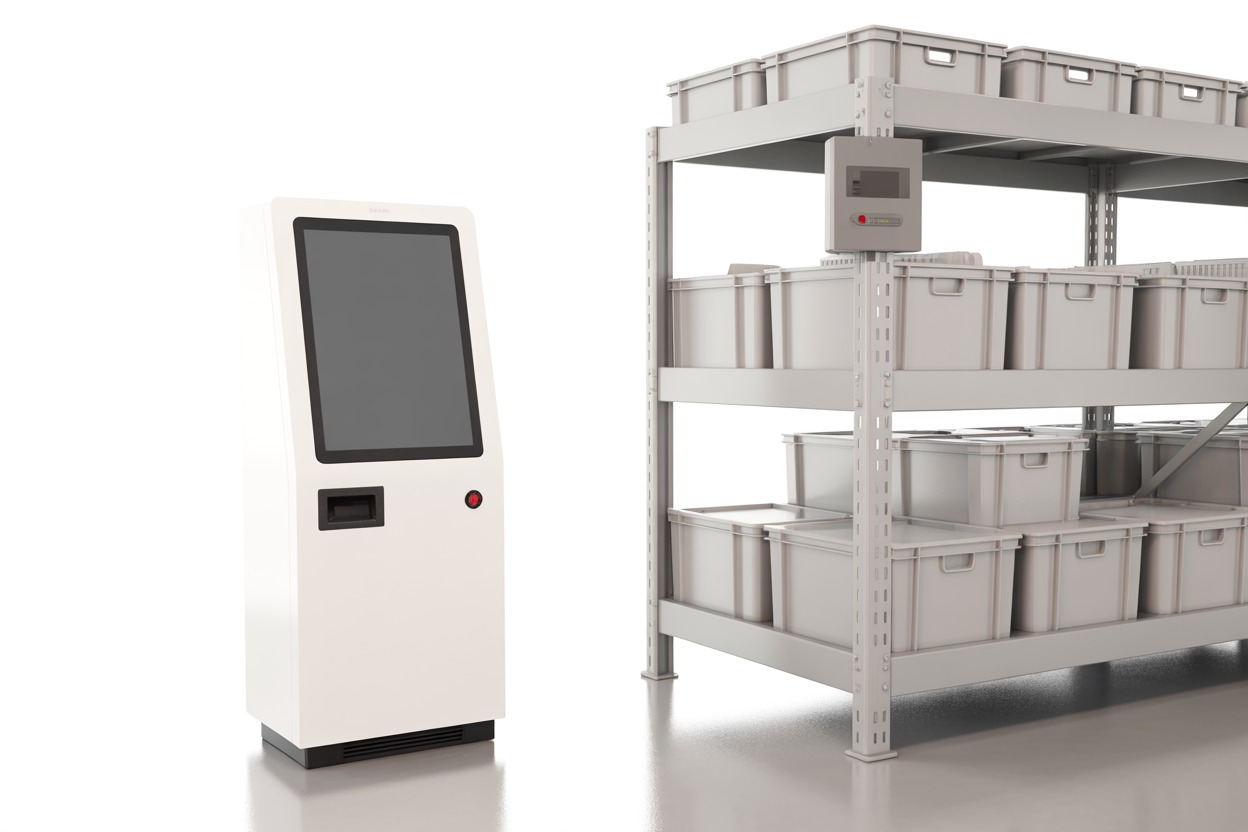
2025An RFID-based asset and inventory system that replaces manual paperwork and slow physical searches with automated, non-contact tracking. Assets are tagged the moment they enter the system — at manufacturing, distribution, or receipt — giving readers fast, bulk identification even in dense storage, and full lifecycle visibility from that point on.
A self-service kiosk maps a user's body or item dimensions straight to the correct rack or shelving location, a particular win for multi-size stock like clothing. Loans are authorised by scanning the item's tag alongside user ID and a store manager's sign-off, and flagged automatically if not returned within the loan window.
Returns run through linked measurement instruments that record any change in an item's dimensions, and a real-time dashboard gives store managers constant visibility of what's currently on hold.
“A clear understanding of warehouse operations complexity, translated into a technically coherent, user-centric design. Completed to specification, on schedule, and met every requirement in our scope.”

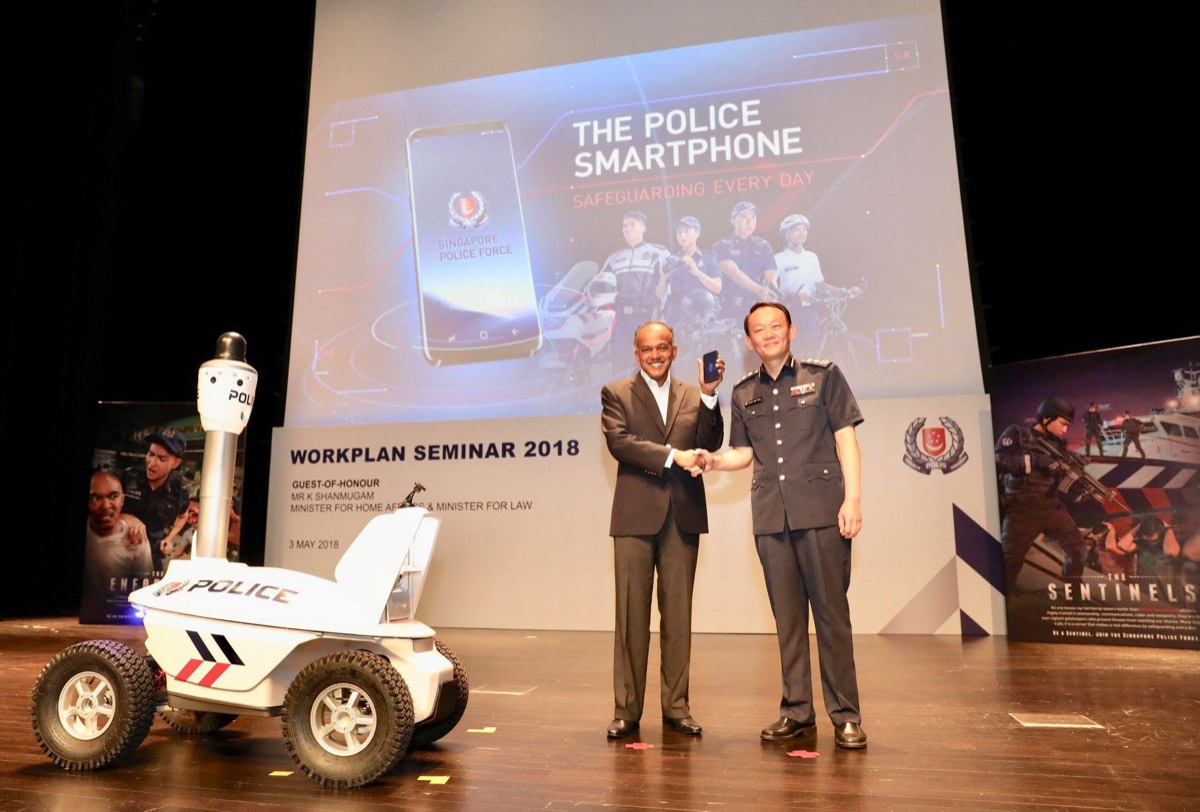
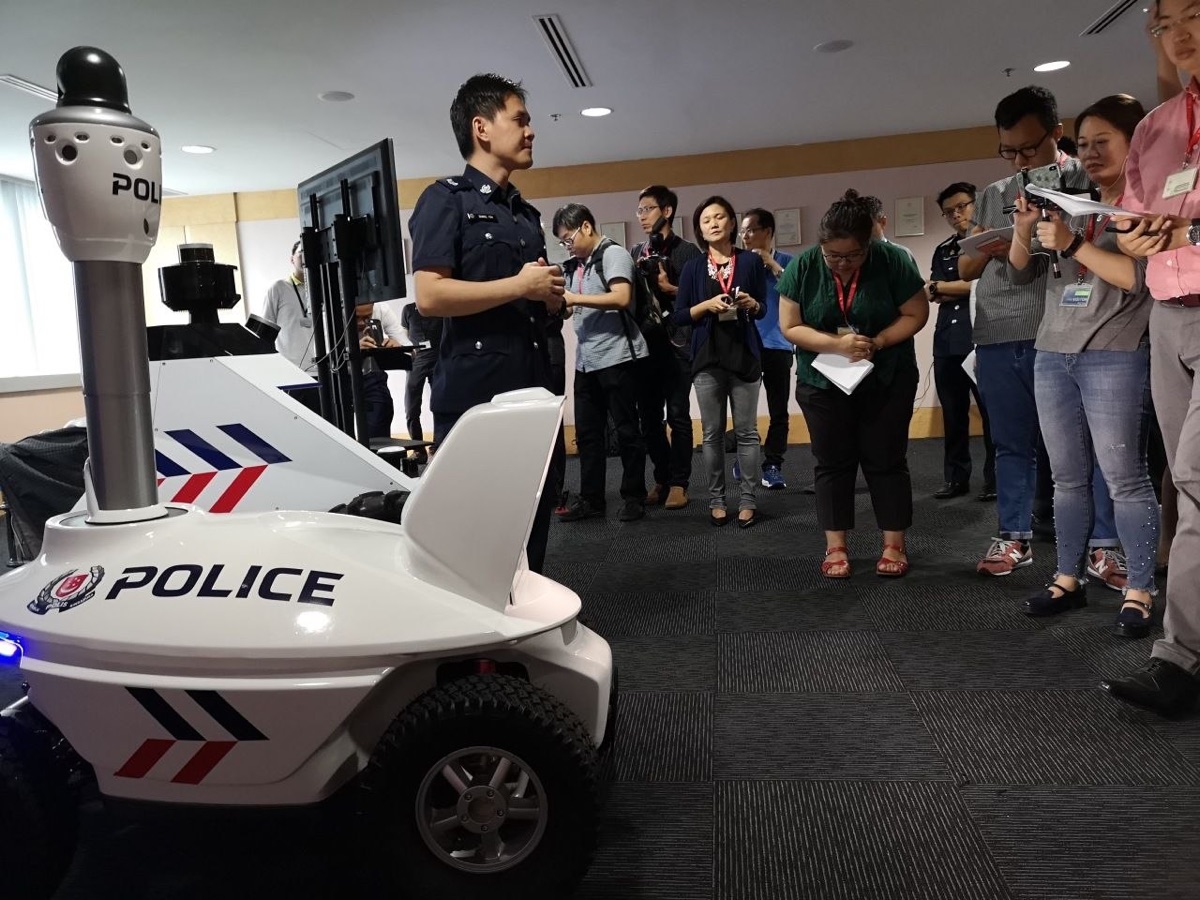
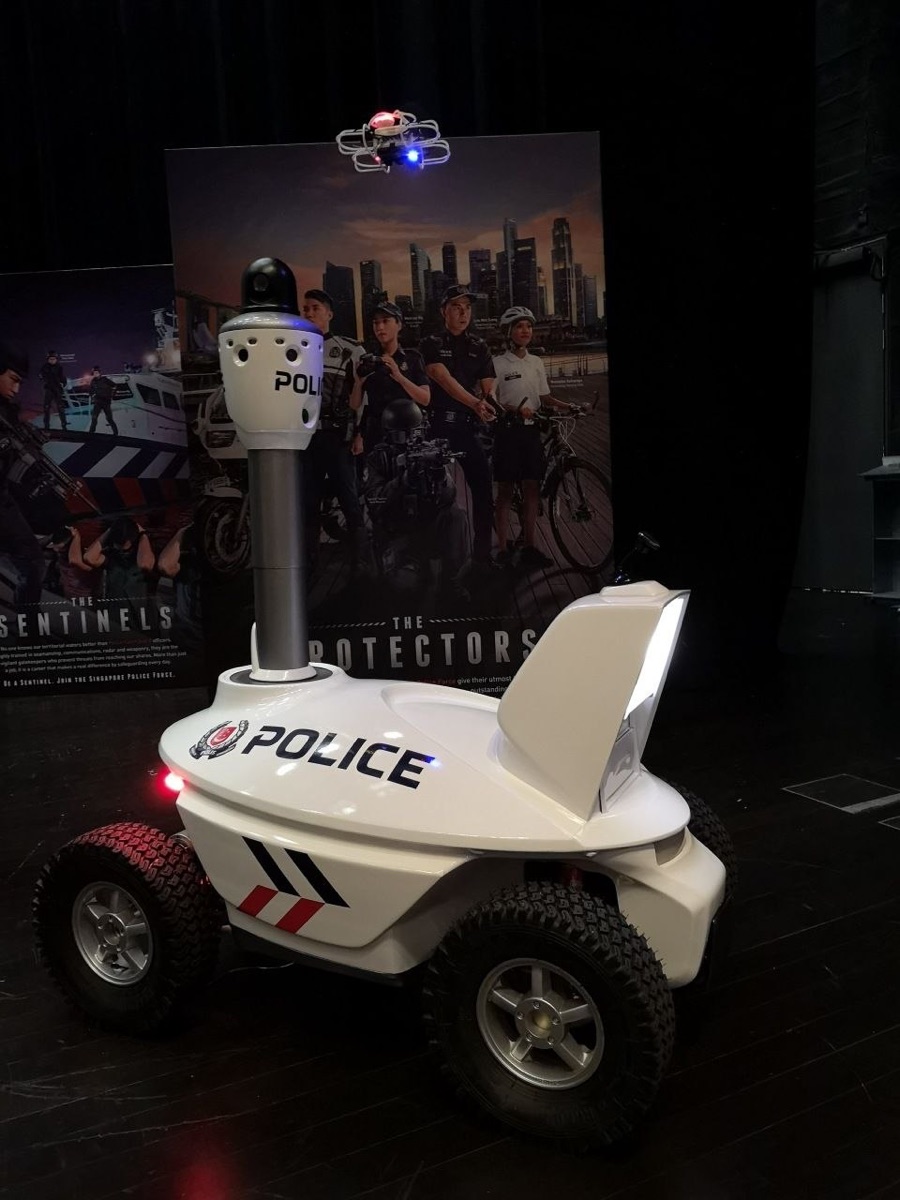
Singapore Police Force
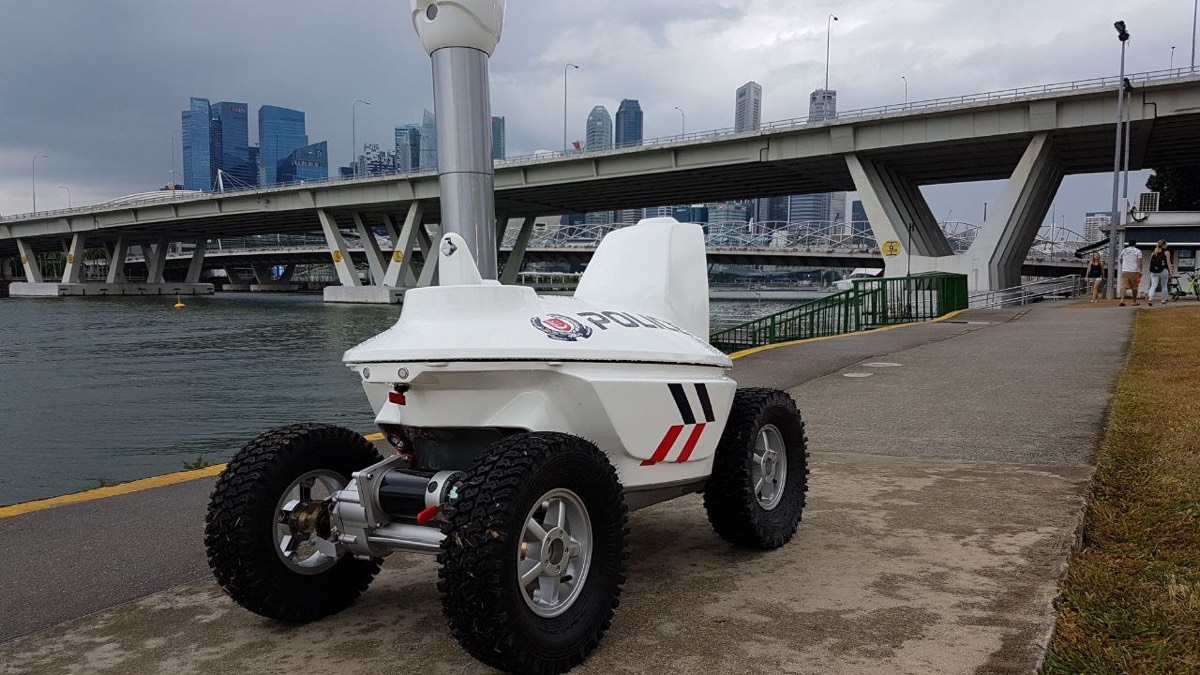
2018Heritage, not a current offeringThe S5 autonomous robot supported police security operations at Chingay 2018, an event expecting a 100,000-strong crowd on its opening day, in the force's first trial of a patrol robot. It followed a pre-mapped route with obstacle avoidance, fed continuous 360-degree video from six surround cameras back to the command post for threat assessment, and could broadcast audio to assist crowd management.
The Chingay 2018 deployment, February 2018
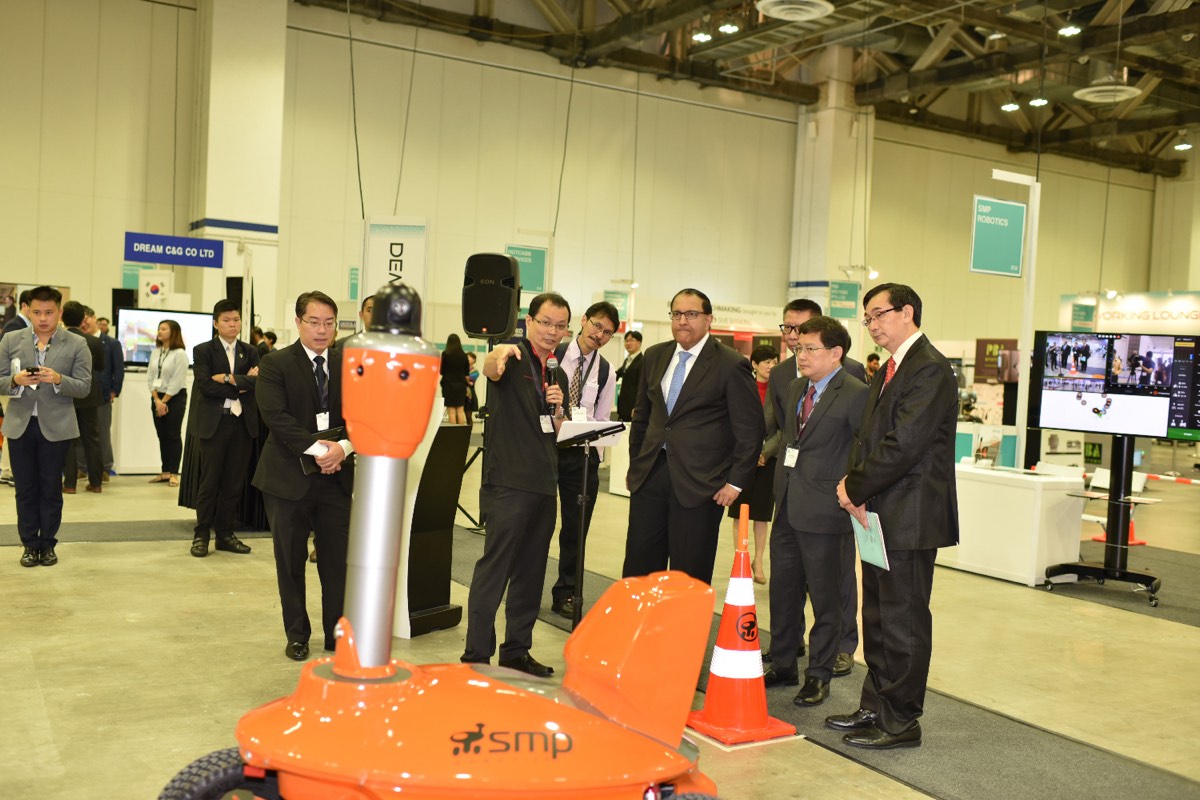
Singapore International Robo Expo
2016Heritage, not a current offeringOne of the world's first fully autonomous surveillance robots, shown in live demonstration at the inaugural expo. Autonomous patrolling and obstacle avoidance around dynamic human movement were demonstrated to the Guest of Honour, then Minister of Trade and Industry (Industry) Mr S Iswaran, and to expo delegates.
The SIRE 2016 premiere, November 2016
Singapore Police Force
2018Heritage, not a current offeringThe S5 robot was demonstrated on stage at the Police Workplan Seminar 2018, presented to Guest-of-Honour Mr K Shanmugam, Minister for Home Affairs and Minister for Law, alongside the Police's own smartphone technology showcase. Television press covered the robot's roboticised security guard patrol capabilities on the seminar floor.
The Police Workplan Seminar 2018, Guest-of-Honour Mr K Shanmugam, Minister for Home Affairs and Minister for Law, 3 May 2018
Clients












Comparing us against other integrators? Score us on the same ten criteria we would want used on anyone.