Orion Five Engineering

10 Jalan Kilang #04-05, Singapore 159410
+65 6100 5505

Book a scoping call

Robotics integration

We deploy robots on your site and connect them to the systems already there

We assess your site and write the safety case. We then connect AGIBOT humanoids and service robots to your lifts, doors and systems, and support the robots once they are running.

  • Featured: AGIBOT A3 Ultra
  • Singapore

Featured robot

UNIT 01

The AGIBOT A3 Ultra is a full-size humanoid built to work through a full day

The A3 Ultra is a 174 cm, 60 kg humanoid for front-of-house work through a full day: reception, guided tours, retail assistance and patrol. It maps its surroundings, returns to its charger on its own and changes a battery in ten seconds. It can therefore keep working when a battery runs low.

The A3 Ultra uses the motion and interaction system of AGIBOT's A3 and adds the features a commercial deployment needs. It combines LiDAR with 360° vision instead of relying on cameras alone. Its 700 TOPS of on-board compute plan tasks and avoid obstacles without a remote operator. It locates itself to within a centimetre, using UWB (ultra-wideband) indoors and RTK (real-time kinematic) positioning outdoors. Its hands have up to 20 degrees of freedom and tactile sensing. AGIBOT builds it in runs of thousands of units, and each unit passes a 92-step inspection before it ships.

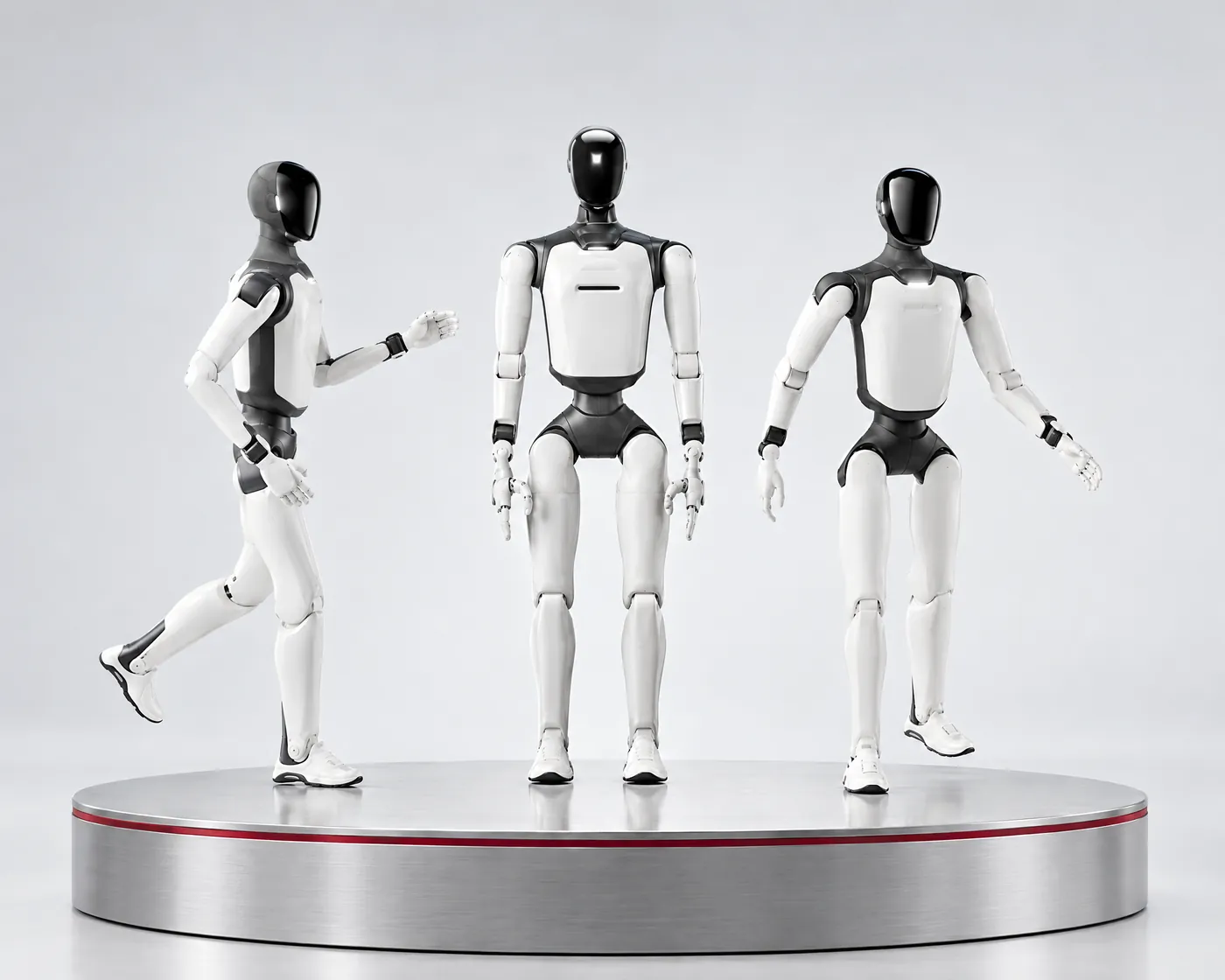
Three AGIBOT A3-series humanoids on a circular brushed-steel plinth edged in red, in a light grey studio.
FIG. 01 · The A3 family
Height
174 cm
Weight
60 kg
Compute
700 TOPS on board
Perception
LiDAR, surround-view cameras and dual depth cameras, 360°
Positioning
UWB indoor and RTK outdoor, accurate to under ±1 cm
Hands
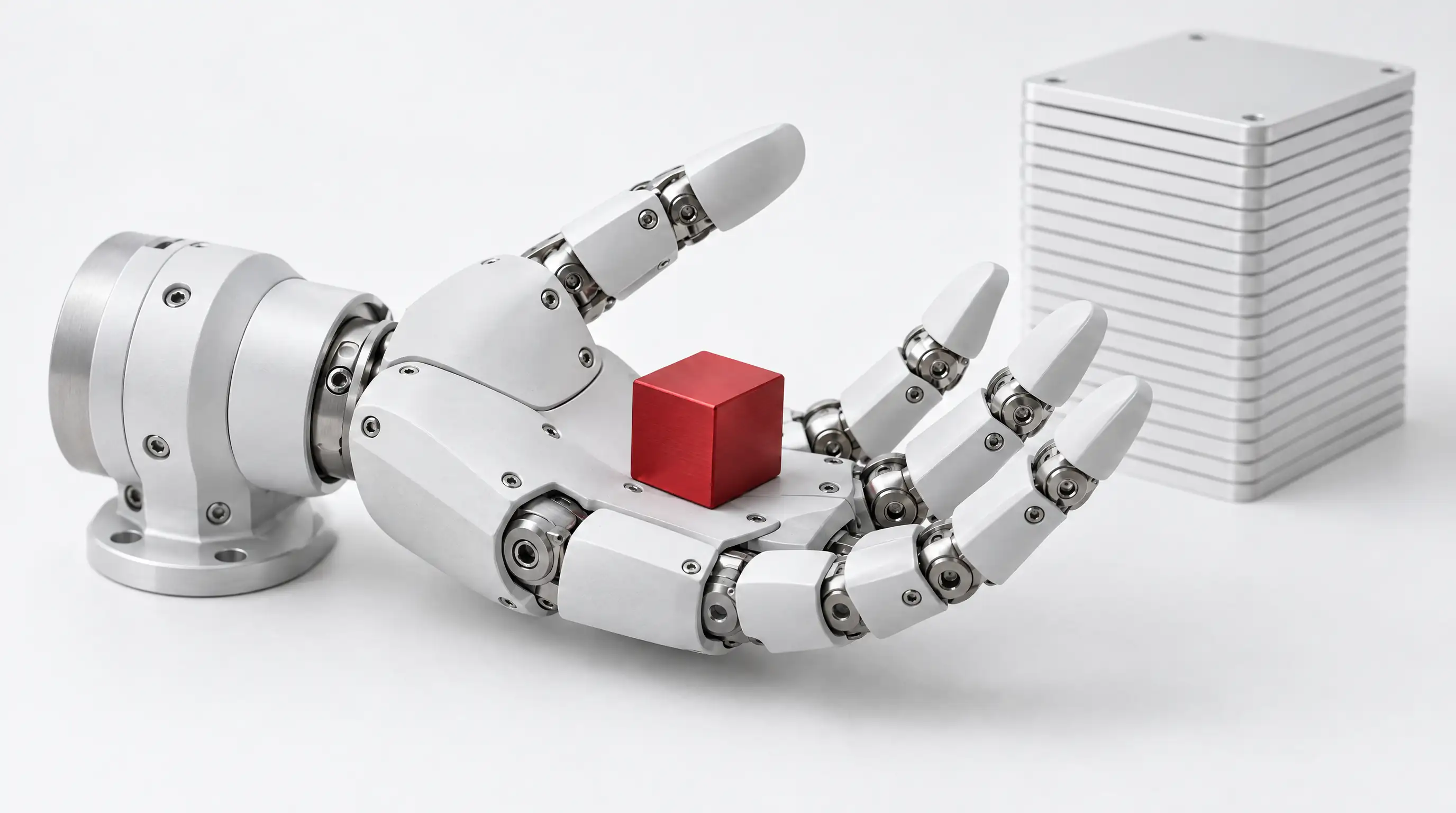
Omnihands, up to 20 DoF, omnidirectional tactile sensing
Battery life
8 hours
Charging
Autonomous plug-in charging, 10-second battery swap
Network
Dual-band 5G, dual eSIM and physical SIM
Fleet control
Coordinates 100+ units through LinkBots
Deployment
Leaves and re-enters its own case; one person can deploy it

Specifications as published by AGIBOT.

Why it suits commercial deployment

Runs around the clock

Each battery lasts eight hours. The robot returns to its charger on its own, changes batteries in ten seconds without shutting down, and has a custom air-cooling system. AGIBOT specifies it for continuous 24/7 operation without manual remote control.

Hands that handle real objects

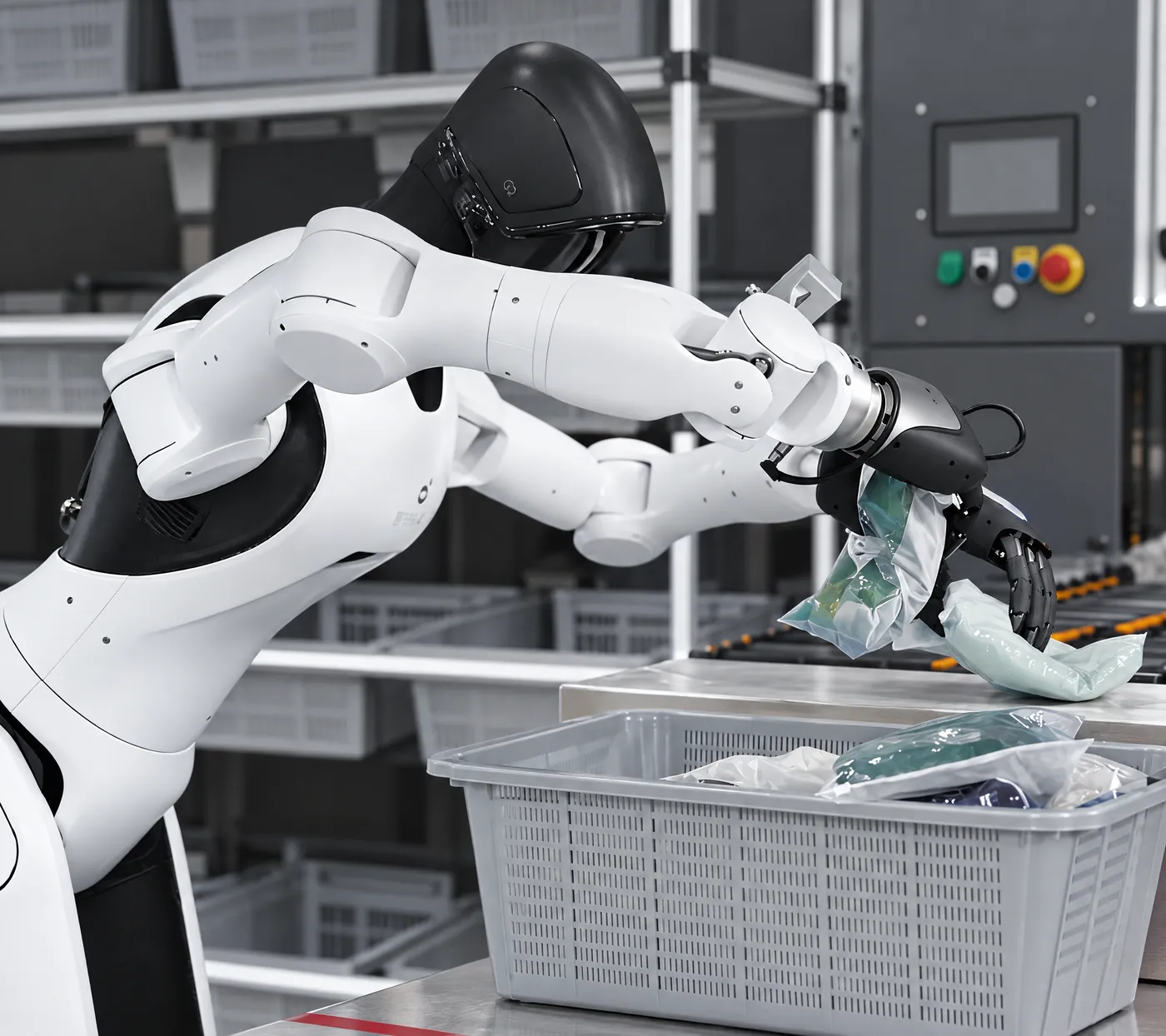
Omnihands with up to 20 degrees of freedom and tactile sensing handle objects from a sheet of paper up to 5 kg. The robot can learn a new skill from a single demonstration. It also climbs stairs and slopes.

Four layers of safety

It predicts risk three metres ahead and stops on contact under force control. Either of two emergency stops cuts power within milliseconds. If it falls, it protects itself and the people nearby. AGIBOT validates it through thousands of collision, drop and temperature tests.

Works indoors and outdoors

UWB indoors and RTK outdoors give positioning to the centimetre, and the robot switches between the two without interruption. Dual-band 5G keeps it connected across a site or a campus.

Built in volume

AGIBOT was among the first manufacturers to build full-size humanoids in thousands. Each A3 Ultra passes a 92-step inspection to automotive-grade test standards, and its core components are endurance-tested for tens of thousands of hours.

Diagnoses its own faults

The robot diagnoses its own faults automatically, and its modular parts can be replaced quickly. It folds into a case that fits in an SUV. Its open interfaces let us build behaviour specific to your site on top of it.

Where we would deploy it

01

Reception and guided tours

Corporate showrooms, hotel lobbies, government front desks and office buildings. It gives the same standard of service at 3 a.m. as at 3 p.m.

02

Retail and shopping assistance

In-store guidance, brand events and mall concourses. The robot presents products, guides customers and answers their questions on its own.

03

Patrol and inspection

Outdoor patrols of large sites, checkpoints in data centres and other facilities, and environmental monitoring over long distances, with positioning by RTK.

04

Research and education

A full-size platform for embodied-AI research, teaching and secondary development.

05

Data collection

One full-size humanoid for collecting data and for training, evaluating and deploying embodied-AI models.

06

Events and performance

It retains the A3's dance, formation and choreography functions, so one unit can do daily work and also perform at events.

What we integrate

UNIT 02

Integration with your site decides whether a robot deployment succeeds

Robots arrive with capable autonomy, but they do not know your site. They do not know which lift to call, which system holds the next task, who may enter the robot's work area, or who responds when it stops. Integration gives the robot this information. It decides whether a deployment is still running after its first month.

Building systems: lifts, doors and gates

We connect the fleet to lifts, automatic doors, turnstiles and access control, so robots can move between floors and zones. We use Open-RMF, the open fleet-management framework that came out of Singapore's National Robotics Programme. We also connect to the interface that Singapore now publishes as SS 713.

Enterprise systems

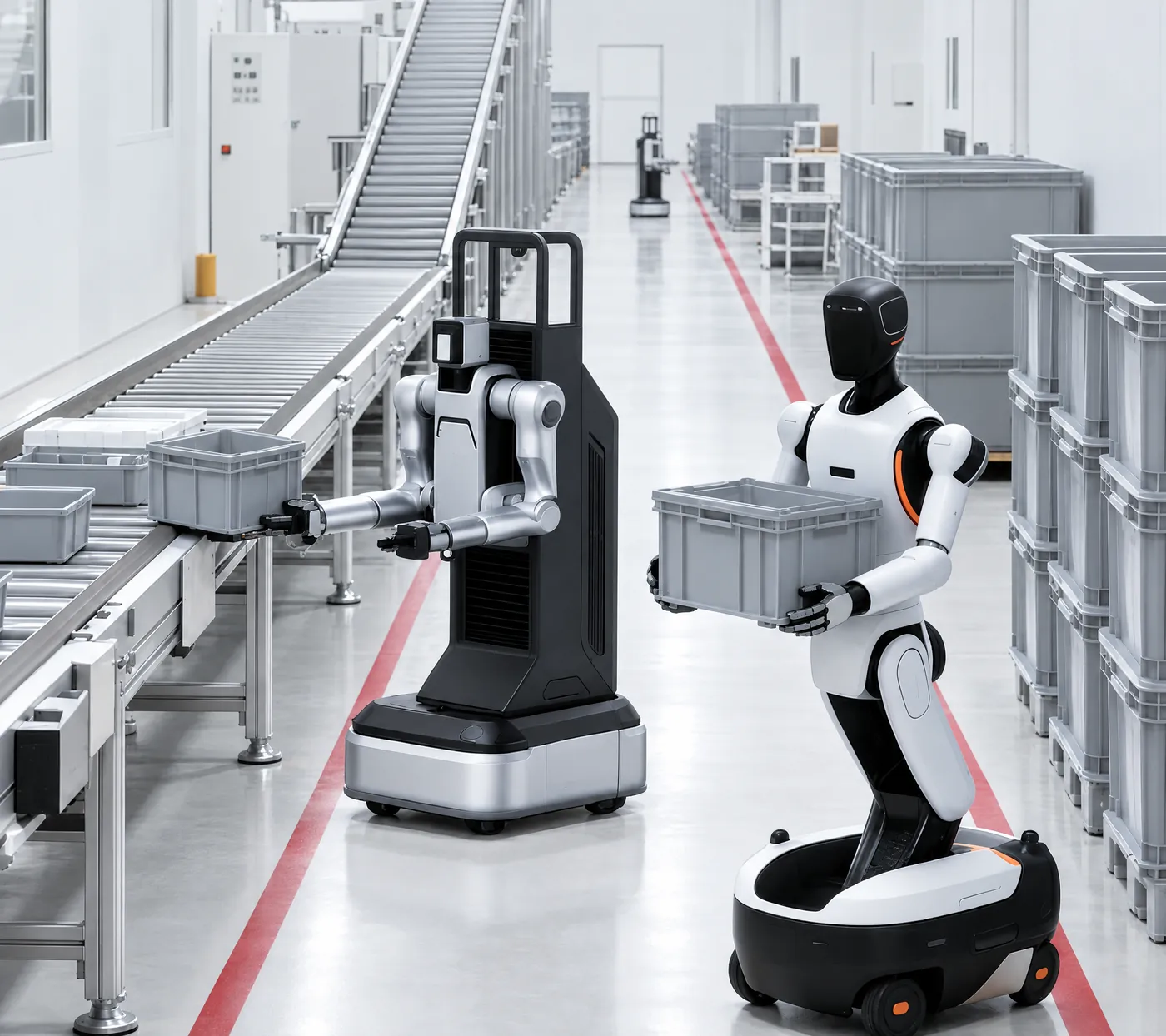
We connect robots to your WMS (warehouse management system), MES (manufacturing execution system), BMS (building management system), visitor management or ticketing system. The robots take their tasks from these systems and report results back to them. This is the same integration work we already do for our clients.

Safety case and risk assessment

Before a robot works near your people, we document a risk assessment for each site and task. It covers separation, speed, stopping distances and emergency-stop coverage. We write it against the applicable ISO, IEC and Singapore standards.

Network and cybersecurity

We survey Wi-Fi and 5G coverage on site and separate the robot fleet from your production and corporate networks. We control remote access in line with IEC 62443. We treat each robot as a connected computer that moves, and secure it in the same way.

Content, skills and personas

For front-of-house robots, we build the knowledge base, languages, scripts, tour routes and persona the robot uses with visitors. For industrial robots, we build task workflows in AGIBOT's Genie Studio and test them in simulation before they go live on site.

Operations and fleet support

We provide monitoring, alerting, remote intervention, spares planning, software updates and a named engineer to call. Under this contract, we are responsible for the fleet after launch.

Solutions

UNIT 03

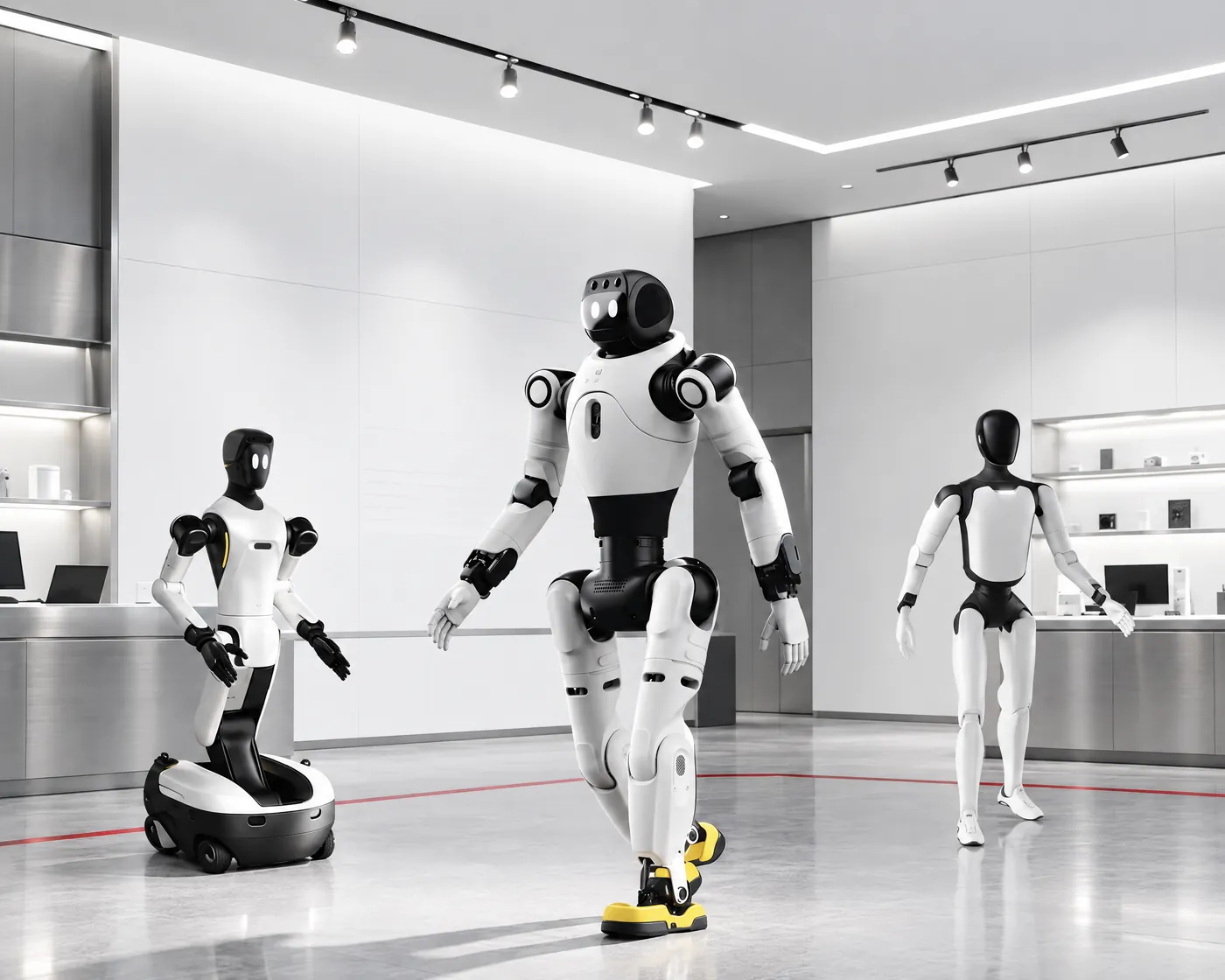
We offer five solutions, each using the robot that best fits the task

Each solution has its own page. It sets out the problem, the robots that do the work, a typical task sequence and the integration work we add.

How an engagement runs

UNIT 04

Our robotics engagement runs in six phases, and you can stop at the end of any phase

You should not buy a fleet based on a demonstration. Each phase ends at a gate with a written test, and you buy the next phase only after that test is passed. A proof of concept that shows a robot is not suitable is still a useful result. It costs far less than a fleet that does not suit your operation. How these phases map onto our four delivery stages.

  1. 01

    Assess

    We walk the site and study each task: what the robot would do, how often, near which people, and which systems it must connect to. We check grant eligibility at the same time.

    Gate A shortlist of tasks, each with a baseline you can measure against.

  2. 02

    Design

    We choose the robot to fit the task, instead of changing the task to fit a robot. We then lay out routes and charging points, and design the interfaces to lifts, doors and systems. We test the workflows in simulation first.

    Gate A signed-off design and written acceptance criteria.

  3. 03

    Prove

    We run a short proof of concept on one task, on your site or ours. We scope and quote it before it starts. We keep it small, so a negative result costs little.

    Gate Task success rate and safety validated against the acceptance criteria.

  4. 04

    Pilot

    After training and network hardening, a small fleet works live shifts with your staff. The pilot produces the real performance figures.

    Gate Site acceptance test against the baseline from phase 01.

  5. 05

    Scale

    We add units and sites, and manage them as one fleet. Configuration, content and integrations carry over from the pilot, so we do not rebuild them.

    Gate Acceptance across the whole fleet and a handover to operations.

  6. 06

    Operate

    We provide a support contract scoped to your site. It covers monitoring, remote fixes, on-site attendance when a fault requires it, spares planning and updates. Each quarter we review how the fleet is actually performing.

    Gate Reviewed every quarter against the KPIs you bought it for.

Buying and support

UNIT 05

You can buy in several ways, and the support commitment is the same for each

Whichever way you plan to buy, start with a proof of concept. After that, most clients buy their fleets outright. If a lease or subscription would suit you better, raise it at the assessment and we will tell you what is available. The support is the same in every case, and the contract lists each item.

  • Fleet monitoring with alerting on faults, low battery and stalled tasks
  • Remote diagnosis and intervention
  • On-site support in Singapore when an engineer must work on the robot in person, with response times agreed in the contract
  • A spares plan for parts that wear out, agreed in the support contract
  • Software and model updates, tested before they reach your fleet
  • Operator and supervisor training, refreshed when staff change
  • A quarterly review of utilisation, uptime and task success against the baseline
01

Proof of concept

A small, scoped trial on one task, quoted before it starts. It is the lowest-cost way to find out whether a robot suits your operation.

02

Purchase with support

You buy the robots outright and take a support contract scoped to your site. This suits a fleet you intend to keep for its working life.

03

Leasing or subscription

If you prefer not to buy outright, ask us about leasing or a subscription. Availability depends on the robot, the fleet size and the term. We will tell you clearly during the assessment.

Standards

UNIT 06

We write each safety case against named international and Singapore standards

A robot's certification covers only the robot. Installing it on your site creates a new application, and the integrator is responsible for the safety of that application. We name the standards at the start, so you can check the design against them.

ISO 10218-1 and -2:2025

Safety of industrial robots and robot applications. Part 2 is written for integrators. It now includes most of the collaborative-robot guidance from ISO/TS 15066 and adds cybersecurity requirements.

ISO 13482

Safety of personal and service robots. This is the standard that applies to front-of-house deployments. The 2014 edition is current, and a revision is in progress.

ISO 3691-4:2023

Driverless industrial trucks and their systems. It applies wherever a wheeled robot or an autonomous scrubber shares an aisle with people and forklifts.

ISO 25785-1 (draft)

Industrial mobile robots that must actively balance, such as legged humanoids and quadrupeds. It is still a committee draft, so we follow its progress but do not claim compliance with it.

IEC 62443

Security for industrial automation and control systems. We apply 62443-3-3 to the fleet as a system: zones, conduits and remote access.

SS 713 and Open-RMF

Singapore's standard for data exchange between robots, lifts and automatic doors, and the open framework that implements multi-vendor fleet coordination on top of it.

Robotics adoption in Singapore can qualify for government support, including Enterprise Singapore's grants for automation projects and IMDA's programme for robot interoperability in buildings. Schemes and their terms change, so we check your project's eligibility during the assessment instead of quoting a funding percentage in advance. Read about funding your project.

Our record

UNIT 07

We have built and deployed robots for public safety and manufacturing clients

Autonomous patrol robot, 2016 to 2018

Our S5 autonomous surveillance robot supported the Singapore Police Force at Chingay 2018, in the force's first trial of a patrol robot, and was demonstrated at the Police Workplan Seminar that year. Read the case study.

Robotic carton removal line, 2022 to 2024

For Raymang Eggs, we built a grant-funded line of six-axis arms that unboxes, cuts and stages imported egg cartons. Unboxing that took 24 hours by hand now takes one hour for the same volume. Read the case study.

Further reading

UNIT 08

Our research sets out what robots can do in production today

See all our insights

Book a robotics site assessment