Executive summary
13,318
humanoids shipped worldwide in 2025, by Omdia's count; IDC put it nearer 18,000
US$1.8m
Agility Robotics' 2025 net sales, per its SEC merger filings, across nine customer facilities
~3,300 h
productive hours a year a Digit rented at about US$8,500 a month needs to beat a US$30-an-hour worker (our arithmetic)
2028
the Home Team's target for Singapore's first operational humanoid; we found no production-scale deployment there
Key conclusions
- Humanoid shipments were counted in thousands of units. Most went to research, education, reception and entertainment buyers, and a minority went to factory work.
- In the US and Europe the record is small pilots, and no customer has published an independently audited ROI, uptime or intervention rate for any humanoid programme.
- The tasks with the best evidence are narrow, structured and close to logistics. Two of the best-documented cases, Galbot and Moxi, use wheeled robots.
- Before a pilot, calculate the utilisation the robot needs to break even. Then pilot one task, measure autonomy and uptime yourself and pay the vendor on milestones.
This case-study review is for plant, logistics, facilities, hospitality and healthcare operators in Singapore and Southeast Asia who are deciding whether to pilot a humanoid or another kind of robot. It sets out what was deployed, what the numbers show, who reported them and what remains unproven.
Disclosure: Orion Five integrates AGIBOT robots. We hold AgiBot to the same evidence standard as every other company here. We attribute its figures, report its tracker rankings alongside the conflicting ones, and state where we found no independent deployment evidence.
How to read this article: we attribute every figure in the sentence that carries it. We separate four levels of activity: a demo (a staged showcase), a pilot (an on-site trial with a few units, often unpaid or paid as a proof of concept), paid production (a commercial contract with robots doing work the customer relies on) and a target (a plan or announcement). We also separate vendor-reported numbers from independently verified ones. Very few numbers in this field are independently verified, and we flag each case.
Summary: humanoids reached paid work by 2026, in small numbers and narrow tasks
Between January 2024 and October 2026, humanoid robots moved from demonstration videos to their first paid work. That work involved thousands of units, and most of these units did not do factory work. Omdia counted 13,318 humanoids shipped worldwide in 2025, about 90% of them from Chinese makers [2]. IDC counted about 18,000 units worth about US$440 million [1]. For the first half of 2026, trackers counted between about 19,100 (Smart Analytics Global) and almost 25,000 (IDC) [4][5]. Most of these units went to research, education, reception, tour-guide and entertainment buyers. Unitree's own IPO prospectus describes research and education as its main customers [17][25].
In the United States and Europe the record is one of small pilots. We found no disclosed deployment of more than tens of humanoids at any single site. The most detailed account is Figure's: Figure says its Figure 02 robots logged more than 1,250 hours and loaded more than 90,000 parts over an 11-month pilot at BMW's Spartanburg plant, after which the fleet was retired [26]. Agility Robotics says its Digit robots moved more than 100,000 totes at a GXO warehouse [30]. However, Agility's own SEC filings show US$1.8 million of net sales in 2025 [33]. Tesla, which had targeted thousands of Optimus robots for 2025, conceded in January 2026 that none was doing "useful work" in its factories [42]. No customer has published an independently audited return on investment, uptime figure or intervention rate for any humanoid programme we reviewed.
The opportunities are real, but they are narrow. The tasks with the strongest evidence are structured, repetitive and close to logistics: moving totes from mobile robots to conveyors, loading parts into fixtures, sequencing components, and picking medicines in a robot-run pharmacy. The best-evidenced paid retail case, Galbot's Beijing pharmacies, uses a wheeled humanoid that does not walk [62][63]. Hardware prices are falling fast. Unitree's average humanoid selling price fell about 72% between 2023 and the first three quarters of 2025, according to its prospectus as analysed by Recode China AI [21]. Four problems remain open. The first is autonomy: in many products, remote human operators (teleoperation) fill the gaps. The second is safety evidence: no published standard covers legged robots working near people. The third is cybersecurity, and the fourth is cost. At a reported rental rate of about US$8,500 a month, a Digit has to work about 3,300 productive hours a year to beat a US$30-an-hour worker, which means close to two shifts a day.
For an operator in Singapore or Southeast Asia, we recommend the following. Treat a humanoid as one option alongside mobile robots, cobots and wheeled mobile manipulators. Pilot one task, measure autonomy and uptime yourself, and pay on milestones. We found no production-scale humanoid deployment in Singapore as of mid-October 2026. The Home Team's S$100 million humanoid centre targets its first operational humanoid by 2028 [106].
Status as of 17 October 2026: this article reflects sources available on that date. The figures most likely to change soon are: Tesla's Optimus production status (its third-quarter 2026 results are due in late October); whether Agility's SPAC merger closes, and with how much cash; whether 1X delivers NEO robots to paying homes by its end-2026 target; full-year 2026 shipment counts, which trackers will publish from January 2027; and EU compliance obligations, which change when the Machinery Regulation applies in January 2027.
Humanoid shipments are counted in thousands of units, and the trackers disagree
No single shipment count is authoritative. The trackers use different definitions, and some rely on data supplied by the vendors they rank. The table shows the main counts side by side.
| Tracker | Period | Global units | Leading vendor (as counted) | Caveat |
|---|---|---|---|---|
| IDC [1] | 2025 | ~18,000 (+508% year on year); ~US$440m revenue | AgiBot ~5,200 (of which ~1,300 full-size) | Methodology not published in the coverage we found |
| Omdia [2][120] | 2025 | 13,318 | AgiBot 5,168 (~39%); Unitree 4,200 (~32%); UBTech ~1,000 | Chinese firms ~90% |
| Unitree prospectus [3][17] | 2025 (Unitree only) | >5,500 shipped by Unitree alone; ~5,716 produced | Unitree claims No. 1 globally | Contradicts Omdia's ranking; a regulated disclosure, but self-reported |
| IDC [4] | H1 2026 | almost 25,000 (+432%) | AgiBot >8,600 (~35%) | The IDC graphic was distributed by AgiBot; methodology unpublished |
| Smart Analytics Global [5] | H1 2026 | ~19,100 (+272%) | AgiBot ~8,400 (44%); Unitree ~5,900 (31%) | Reported via SCMP and Digitimes |
Three points follow. First, the ranking at the top depends on whose count you use. Omdia put AgiBot first in 2025 [2]; Unitree's prospectus says Unitree shipped more than 5,500 humanoids and was first [3]. Unitree publicly disputed AgiBot's claim in January 2026 [3]. No independent auditor has reconciled the two claims. Second, the totals differ by up to about 40% for the same period, so a range is more honest than a single number. Third, a shipped unit is not necessarily a deployed one. IDC's 2025 revenue of about US$440 million across about 18,000 units implies an average of roughly US$24,000 a unit (our arithmetic) [1]. That average fits a mix weighted towards small research and education robots rather than full-size factory robots.
Western volumes are far smaller. Activant Capital wrote in June 2026 that Figure "had shipped about 150 robots" when it raised money at a US$39 billion valuation [10]. Agility's SEC filings cite 65,000-plus hours of operation across nine customer facilities [32]. Tesla had disclosed no verified Optimus production unit as of 20 July 2026 [43].
On the forecast side, Bank of America projected 90,000 humanoid shipments for 2026 [6]. If the first-half run-rate of 19,100 to 25,000 holds, full-year 2026 shipments would reach roughly 40,000 to 55,000 (our arithmetic). That is about half the BofA figure, unless shipments rise steeply in the second half.
China's low hardware costs now shape the sector's economics
Bank of America estimated in March 2026 that a Chinese-made humanoid had a bill of materials of about US$35,000 at the end of 2025. It projected that figure to fall below US$17,000 by 2030 if most hardware is sourced in China. BofA put Western pilot-stage units at US$90,000 to US$100,000 each, and Tesla's Optimus Gen 2 hardware at about US$50,000 to US$60,000 [6]. Secondhand summaries of a Morgan Stanley Optimus teardown put actuators at roughly half of the bill of materials and hands at about 17% [124]. We could not check that teardown against the original report.
List prices show the same direction. Unitree launched the G1 in 2024 at RMB 99,000, and its full-size H1 starts at RMB 650,000 [23]. It launched the R1, a 1.2-metre development platform weighing about 25 kg, at RMB 39,900 (about US$5,900) in July 2025 [22]. A Hangzhou government site reported the R1 cut to RMB 29,900 by June 2026 [24]. The R1 is not a full-size working humanoid, and industrial-grade units cost several times more. According to Unitree's prospectus as analysed by Recode China AI, its average humanoid selling price fell from RMB 593,400 in 2023 to RMB 260,700 in 2024 and RMB 167,600 in the first three quarters of 2025 [21]. Unitree still reported a core gross margin of about 60% [17].
In the West, Agility's pricing model is about US$200,000 to buy a Digit, a US$20,000 deployment fee and US$36,000 a year for software and maintenance. Agility's SPAC materials reportedly model robots-as-a-service at about US$8,500 per robot per month [37][38]. 1X priced its NEO home robot at US$20,000 or US$499 a month [66]. Tesla has no list price for Optimus. Elon Musk's figure of US$20,000–30,000 is a target.
Investor valuations have run far ahead of revenue
Figure raised more than US$1 billion at a US$39 billion post-money valuation in September 2025. That was about 15 times the US$2.6 billion valuation of its February 2024 round [9]. Skild AI, which builds robot foundation models, raised US$1.4 billion at more than US$14 billion in January 2026 [11]. Apptronik's Series A reached more than US$935 million after a US$520 million extension in February 2026, at a reported valuation of US$5 billion to US$5.5 billion; outlets disagree on the exact figure [12]. One tracker counts US$3.8 billion of disclosed humanoid-only funding in 2025, up from US$2.1 billion in 2024 [121]. Broader "robotics startup" totals of about US$13.8 billion are often misquoted as humanoid-only.
Against that, Figure's valuation is roughly 88 times IDC's estimate of the entire 2025 global humanoid market (our arithmetic) [1][9]. Public markets have priced the sector differently. Agility agreed in June 2026 to go public through a SPAC at a US$2.5 billion pre-money value, only about 19% above its 2025 private round [34]. Unitree listed on Shanghai's STAR Market in August 2026 at about RMB 61 billion (about US$9 billion), and its shares closed 460% above the offer price on the first day, on a tradable float of only 7.44% [19][20]. The failures so far have involved small companies. K-Scale Labs, a seed-stage US startup, shut down in November 2025 after a financing fell through [13]. We found no down round at a major company.
Long-range market forecasts differ by three orders of magnitude
Goldman Sachs projected a US$38 billion market and 1.4 million units by 2035 [7]. Morgan Stanley projected about US$5 trillion, including supply chain and services, by 2050 [8]. Bank of America projected about three billion humanoids in operation by 2060 [6]. Near-term figures are modest: TrendForce expected a market approaching US$4 billion by 2028 [125], and Rodney Brooks has publicly disputed ABI Research's US$6.5 billion for 2030 [16]. The International Federation of Robotics said in August 2025 that mass adoption is uncertain and that humanoids will complement existing robot types rather than replace them [14]. The banks built these scenarios to value supply chains. They are not bottom-up demand models, and operators should not plan around them.
The best-evidenced work is narrow, structured and close to logistics
We review each application area in turn. For each, we set out what the evidence supports and where it is thin.
Factory and automotive
What the evidence supports: in pilots, humanoids have done repetitive station work on live automotive lines: Figure at BMW, Apptronik at Mercedes-Benz, and UBTech in Chinese EV plants (Cases 1, 3 and 5). Foxconn said it would place "fewer than 10" humanoids on an Nvidia server line in Houston from mid-April 2026; no outcome has been reported [71].
Where it is thin: every performance figure is vendor-reported, and no programme has published achieved cycle times, uptime or intervention rates. Announced and actual counts diverge, and Hyundai's plan for tens of thousands of Atlas robots is a 2028-and-later target (Case 6).
Logistics and warehousing
What the evidence supports: this is the most commercially mature application. Agility's 100,000 totes at GXO is the most concrete throughput figure any US humanoid vendor has published (Case 2) [30]. BMW moved Figure 03 to logistics sequencing, and Hyundai's first planned Atlas task is parts sequencing [28][50].
Where it is thin: the tote figure came without fleet size, hours or uptime. A secondary tracker notes that only GXO and Schaeffler are publicly verified as high-duty live Digit sites [127].
Retail and public-facing
What the evidence supports: the clearest paid retail case is Galbot's robot-run pharmacies in Beijing (Case 7) [63]. Reception and tour-guide work is the largest "industrial" revenue line for Unitree's humanoids, according to analysis of its prospectus [25]. In May 2026 Hangzhou put 15 humanoids at intersections to guide pedestrians and assist tourists [75].
Where it is thin: Galbot's store metrics come from the company and from press coverage, not an audit. The Hangzhou robots issue warnings but have no penalty or arrest powers, and no independent audit of their detection accuracy exists [76]. Much public-facing use serves publicity and policy signalling, and involves little productive work.
Home
What the evidence supports: one priced, dated consumer product exists, 1X's NEO (Case 9) [65]. China has a 100-unit household trial of GigaAI's SeeLight S1, which freezes when it detects pets or children [77].
Where it is thin: we found no independently verified paid delivery of a general-purpose humanoid to a Western home. Tesla says Optimus will reach private customers from late 2027 [47].
Care and healthcare
What the evidence supports: the best-evidenced hospital robot is not a humanoid. Diligent's Moxi, a wheeled mobile manipulator, was in more than 25 US hospitals with about 1.25 million tasks completed when Serve Robotics agreed to buy the company in January 2026 [72]. A Children's Hospital Los Angeles executive cited more than 40,000 Moxi deliveries and more than 16,000 hours of work [73]. In Japan, donut robotics' "cinnamon" humanoid has been deployed experimentally in fee-based nursing homes since July 2026 [103]. A Stanford study published in August 2026 found care robots in Japan improved staff retention without displacing workers [104]; it concerns care robots generally, not humanoids.
Where it is thin: we found no peer-reviewed outcome data (falls, staff time saved, patient satisfaction) for any humanoid eldercare pilot. Chinese state media describe a Beijing robot eldercare centre as the "world's first" [122]; it functions as a pilot and showcase platform. The proven hospital use case so far is fetching and delivering, which does not need a human form.
Nine case studies show real tasks but few independently verified numbers
We chose these nine because each has at least one primary or regulated source behind it. They are ordered from the most detailed Western industrial record to the volume business in China and the home market.
Case 01Figure 02 at BMW Spartanburg: one narrow task on a live line, with only vendor-reported numbers
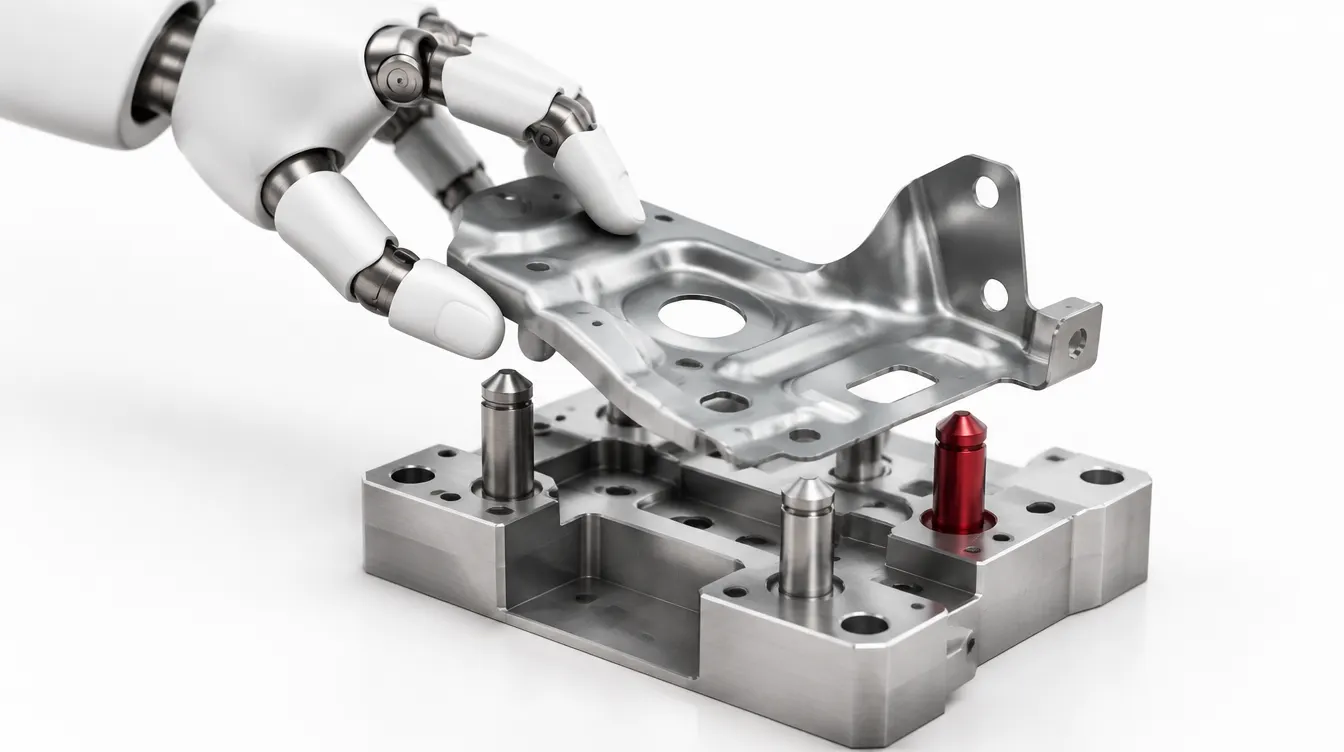
What was deployed: Figure delivered Figure 02 robots to BMW Manufacturing in Spartanburg, South Carolina, within six months of the robot's first bring-up. By month ten they were running on an active assembly line [26]. The task was a single body-shop station: pick sheet-metal parts from a bin and place them on a welding fixture to a 5 mm tolerance, after which six-axis industrial arms do the welding [26]. Figure has never disclosed how many robots were at the site, or whether BMW paid for the work. During 2025 the arrangement was described as a "small-scale feasibility study", and Figure had threatened legal action against outlets that questioned its scale [26].
What it did (the numbers, and who reported them): Figure reports more than 1,250 hours of runtime, more than 90,000 parts loaded, about 1.2 million steps, and 10-hour weekday shifts "eventually". It says the robots "contributed to" more than 30,000 BMW X3s [26][27]. The station targets were an 84-second total cycle, with 37 seconds allocated to loading, and placement accuracy above 99%. Those are described as targets. No achieved cycle-time or accuracy distribution was published [26]. All of these figures come from Figure. None has been independently verified, and BMW has not published its own assessment.
These figures need context. 1,250 hours over about 11 months is roughly 5 to 6 hours per working day, or under 4 hours per calendar day, across the whole fleet (our arithmetic, assuming about 230 working days). Because the fleet size is unknown, the total cannot be converted to a per-robot figure. Even so, it is well below continuous production. "Contributed to 30,000 X3s" means those cars passed through a line where the robots loaded some parts at one station.
What happened next: Figure retired the Figure 02 fleet on 19 November 2025 [26]. Figure was open about its hardware problems. It named the forearm as the "top hardware failure point", citing three degrees of freedom, thermal limits and dynamic cabling packed into a human-sized limb. Figure says Figure 03 removes the distribution board and dynamic cabling that caused the trouble [26]. A single secondary report says the retired robots went to a recycling plant in Finland because no US or Mexican facility would accept their lithium-ion batteries [27]. We treat that as unconfirmed. In 2026 BMW said it would use Figure 03 for logistics sequencing at Spartanburg, sorting components into trolleys for delivery to assembly. It gave no robot count, cycle rate, schedule or commercial terms [28]. BMW's Leipzig plant chose a different supplier, Hexagon Robotics' AEON, for a high-voltage battery assembly test from December 2025, with a pilot phase scheduled for summer 2026 [29]. Claims that "Figure 03 expands to Leipzig" are not supported.
What it shows: a humanoid can do repetitive station work to a set tolerance on a live line for most of a year. However, it took about ten months to reach full shifts, and the hardware wore out in predictable places. The follow-on phase moved to a lower-risk logistics task instead of continuing the body-shop job. For an operator, the most useful numbers would be the ones Figure never published: fleet size, achieved cycle time, interventions per hour and cost per part.
Case 02Agility Digit at GXO: the SPAC filings show a small business
What was deployed: Agility's Digit is a bipedal robot with simple end-effectors, built for tote handling. At GXO's Flowery Branch, Georgia facility it moves totes from autonomous mobile robots to conveyors in live operations [30]. GXO is also testing Apptronik and Reflex robots as part of what it calls a "humanoid workforce" [30]. Agility has said that Digit has run daily 8-hour shifts at Schaeffler's Cheraw, South Carolina plant since early 2025; that statement reaches us through secondary outlets [126]. A secondary tracker reports that Toyota Motor Manufacturing Canada agreed in February 2026 to deploy seven Digits for tote handling in RAV4 production logistics [117]. We have not confirmed that unit count in Agility's filings. Fleets are managed through Agility's Arc cloud platform [31].
What it did (the numbers, and who reported them): Agility announced in November 2025 that the GXO fleet had moved more than 100,000 totes. It gave no fleet size, hours or uptime [30]. Agility's SEC filings for its SPAC merger cite more than 65,000 hours of real-world operation across nine customer facilities, on "earlier Digit generations" [32]. The filings also report US$1.8 million of net sales in 2025, more than US$300 million of multi-year Digit v5 orders "subject to the realization of certain contractual milestones", and a pipeline of 30-plus customers [33]. A Motley Fool figure relayed by humanoid.guide puts Agility's prior-year loss at US$140 million [35]. That figure is secondary and was not checked against the filings. Agility's own payback model claims breakeven in about 1.1 years against a fully loaded US$30-an-hour worker, assuming 120 productive hours a week [38]. It is a vendor model, and no customer has verified it.
What happened next: on 24 June 2026 Agility agreed to merge with Churchill Capital Corp XI at a US$2.5 billion pre-money equity value, under the proposed ticker AGLT. The deal is funded by about US$420 million in trust plus a US$200 million PIPE at US$10 a share led by Foxconn [34]. The SEC later declared the registration effective [39]. As of our research date we could not confirm that the merger had closed, and redemptions could reduce the cash. Between the original S-4 and the amended S-4/A, Amazon was dropped from the list of named customers [31][32]. Agility unveiled Digit 5 on 15 September 2026 as its first robot built for "cooperatively safe" work near people without fencing. Its chief executive, Peggy Johnson, said full commercial availability is targeted for early 2027 [36]. The filings themselves conflict on timing: the S-4 refers to an initial release in late 2026, while a Form 425 says early access begins in the first half of 2027 [33].
What it shows: this is the most commercially mature US humanoid by public evidence, and the SEC filings make it the best-documented one. The filings also show how small the business still is: US$1.8 million of revenue across nine sites implies fleets of single digits to low tens of robots per site. The most important lesson for operators is the cost arithmetic. At about US$8,500 a month (roughly US$102,000 a year), a Digit beats a US$30-an-hour worker only above about 3,300–3,400 productive hours a year (our arithmetic). One 8-hour shift on 250 days is 2,000 hours. The business case therefore depends on multi-shift utilisation and high uptime, and neither has been published for any site. The "US$300 million in orders" headline should always be read with its milestone conditions and against US$1.8 million of booked sales.
Use this calculator to run the same arithmetic with your own inputs. It starts with the reported rental of about US$8,500 a month and a US$30-an-hour worker. Replace them with the figures from your own quote.
Break-even point for robot rental against human labour
Productive hours a year to break even
Like the article, this calculation covers rent only. It excludes deployment fees, supervision, downtime and integration costs.
Case 03Apptronik Apollo at Mercedes-Benz: a well-funded pilot with no published results
What was deployed: Apptronik's Apollo is a full-size bipedal humanoid. Mercedes-Benz is piloting it at its Berlin-Marienfelde Digital Factory Campus and at Kecskemét in Hungary, where Apollo delivers assembly kits, moves totes and does initial component inspection. It is trained using teleoperation and augmented reality [40]. Reports describe a "single-digit number" of robots in test mode. Mercedes invested a "low double-digit million" euro amount in Apptronik [40]. Most sources date the commercial pilot agreement to March 2024 and the equity investment to March 2025. One uncorroborated source claims a further commercial agreement in April 2026. Other partners are GXO and the contract manufacturer Jabil, which signed a collaboration in February 2025 to build, test and use Apollo [12].
What it did (the numbers, and who reported them): we found no published throughput, hours or uptime from Apptronik or Mercedes. TechCrunch reported that the Mercedes partnership had not moved beyond pilot [41]. Apollo has no published price and is not sold commercially [41].
What happened next: Apptronik closed a US$520 million Series A extension on 11 February 2026, bringing the round above US$935 million, with Google and Mercedes-Benz among its backers [12]. Chief executive Jeff Cardenas told CNBC he expects about US$1 billion in orders starting in 2027 [41].
What it shows: funding and a major industrial partner do not prove deployment. "Mercedes deploys humanoids on its assembly line" overstates what is, on the record, intralogistics kitting and inspection by a handful of robots in test mode. When a buyer is also an investor, as Mercedes is here and Hyundai is with Boston Dynamics, its announcements also serve its interests as an investor. Operators should read them with that in mind.
Case 04Tesla Optimus: repeated targets, no verified production units
What was deployed: Tesla has shown Optimus in videos and at events since 2022. At the "We, Robot" event on 10 October 2024, Bloomberg's sources said the robots walked using AI, but remote employees oversaw many interactions with guests. A bartending Optimus said it was "assisted by a human" [46]. Tesla never officially detailed how much was teleoperated, and the sources disagree on the extent.
What it did (the numbers, and who reported them): in January 2025 Musk predicted "roughly 10,000 Optimus robots" would be built that year. The target was missed entirely [42]. In January 2026 Musk himself admitted that no Optimus robots were doing "useful work" in Tesla factories [42]. As of 20 July 2026, Tesla had disclosed no verified Optimus production unit [43].
What happened next: Milan Kovac, head of Optimus engineering, left on 6 June 2025, and Autopilot head Ashok Elluswamy took over [45]. On the first-quarter 2026 call (22 April 2026), Tesla said Fremont Optimus production would start in late July or August 2026 in the former Model S/X space. Musk gave no 2026 volume and called the production rate "literally impossible to predict", because of more than 10,000 unique parts [42]. He moved the Gen 3 reveal to "probably middle of this year" and said a second Optimus factory at Giga Texas should start in summer 2027 [42]. On the second-quarter call (22 July 2026), the summer start became "anticipated later this year", with no date, unit count or price [44]. At Davos in January 2026, Musk said Optimus would be available to private customers from late 2027 [47].
What it shows: on the record, Optimus is a demonstration and pre-production programme with no deployment to study. We include it because its targets shape the market's expectations. Since 2024 those targets have repeatedly slipped by quarters and years. For an operator, a timeline from a vendor with no shipped units states an intention. It should not be used as a planning input.
Case 05UBTech Walker S in Chinese EV and electronics plants
What was deployed: UBTech, listed in Hong Kong since December 2023, makes the Walker S series of full-size humanoids. In March 2025 "dozens" of Walker S1 units ran in Zeekr's factory in Ningbo for what UBTech called the world's first multi-humanoid "collaborative training", covering assembly and quality-inspection tasks [58]. Also in March 2025, Dongfeng Liuzhou announced 20 Walker S1 units for inspection, oil filling and material handling [59]. UBTech began mass production and delivery of the Walker S2, "several hundred" units, in mid-November 2025 [54]. A secondary source lists Walker S2 pilots or deployments at BYD, NIO, Zeekr, Dongfeng and Foxconn in 2025 and 2026 [61]. We did not verify those named customers individually.
What it did (the numbers, and who reported them): UBTech's reported Walker orders rose from above RMB 630 million by October 2025 to above RMB 800 million in November 2025 [54][55]. They included an RMB 250 million order from an unnamed customer in September 2025, and an RMB 159 million data-collection-centre contract in Zigong [55]. UBTech's 2025 annual results, as reported by humanoid.guide, show group revenue of RMB 2.01 billion, full-size humanoid revenue of RMB 821 million (up from RMB 35.6 million in 2024), 1,079 full-size humanoid units sold, and a net loss of RMB 790 million [56]. We did not check these figures against the HKEX filing itself. Order values are announcements, not deliveries. A circulating figure of about RMB 1.4 billion in orders could not be verified. In the plants, a 2026 tracker reports only 11 of Dongfeng's announced 20 units working, in a trial "internship" phase [60]. One lower-confidence report says that at Zeekr, conventional arms and automated guided vehicles ended up doing the key active assembly tasks instead of humanoids [58].
What happened next: UBTech set a target of 5,000 units of output in 2026 [57]. Other reports cite 10,000, so the stated targets conflict [119]. In September 2026, according to a secondary source, UBTech opened a factory in Liuzhou rated at more than 10,000 Walker S and Cruzr units a year [61].
What it shows: UBTech is the clearest case of real revenue from full-size humanoids, with a regulated filer behind the numbers. Much of the order book, though, sits in government-linked data-collection and training centres rather than on automotive production lines. Most factory placements are accurately described as "training" or "internship". For operators, a yuan order headline is evidence of demand from policy-backed buyers. It is not evidence of production performance.
Case 06Hyundai and Boston Dynamics' electric Atlas: the largest plan, with production use not due until 2028
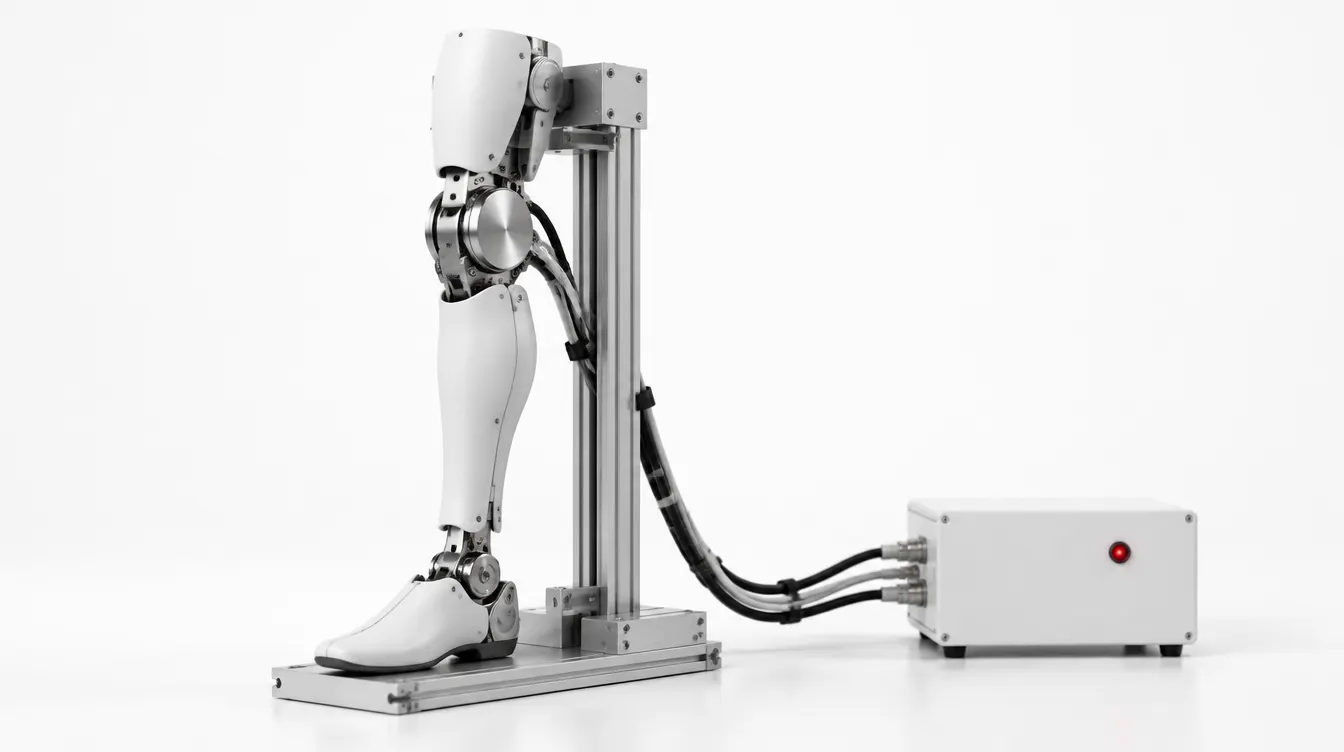
What was deployed: Boston Dynamics, majority-owned by Hyundai Motor Group, launched its production-ready electric Atlas at CES in January 2026. All 2026 Atlas units are committed to Hyundai's Robotics Metaplant Application Center (RMAC) and to Google DeepMind [49].
What it did (the numbers, and who reported them): there are no production-line work metrics yet. The headline numbers are plans. Hyundai said at CES 2026 that it plans to build 30,000 humanoids a year by 2028 [48]. Other coverage frames the deployment target as about 25,000 Atlas units in Hyundai and Kia plants, starting with parts sequencing in 2028 and moving to component assembly by 2030 [50]. At its August 2026 investor day, Hyundai described a US robot factory with 30,000 units a year of capacity across Spot, Stretch and Atlas [52]. So sources differ on whether "30,000" refers to Atlas alone or to three robot lines. In October 2026 Boston Dynamics said it can build an Atlas prototype in a day and is targeting one hour [53]. Some low-quality outlets claim that Atlas has been "on the production floor" since early 2026. Those claims conflict with Hyundai's own 2028 roadmap.
What happened next: RMAC opened on 21 September 2026 at Hyundai Motor Group Metaplant America near Savannah, Georgia, as a centre for training Atlas. Boston Dynamics declined to say how many robots are operating there [51]. Hyundai's Korean union warned, as reported by Reuters, that without a labour–management agreement "not a single robot using new technology will be allowed" into its plants [100].
What it shows: this is the best-capitalised humanoid programme in the world, with a captive customer, and it has still chosen a two-year training-centre phase before production work. Its stated first task, parts sequencing, is a logistics task. Operators should note how long Hyundai is allowing before production, and that it starts with a logistics task. They should also note that a customer that owns the supplier is not an arm's-length reference.
Case 07Galbot's unmanned pharmacies: paid work by a wheeled robot
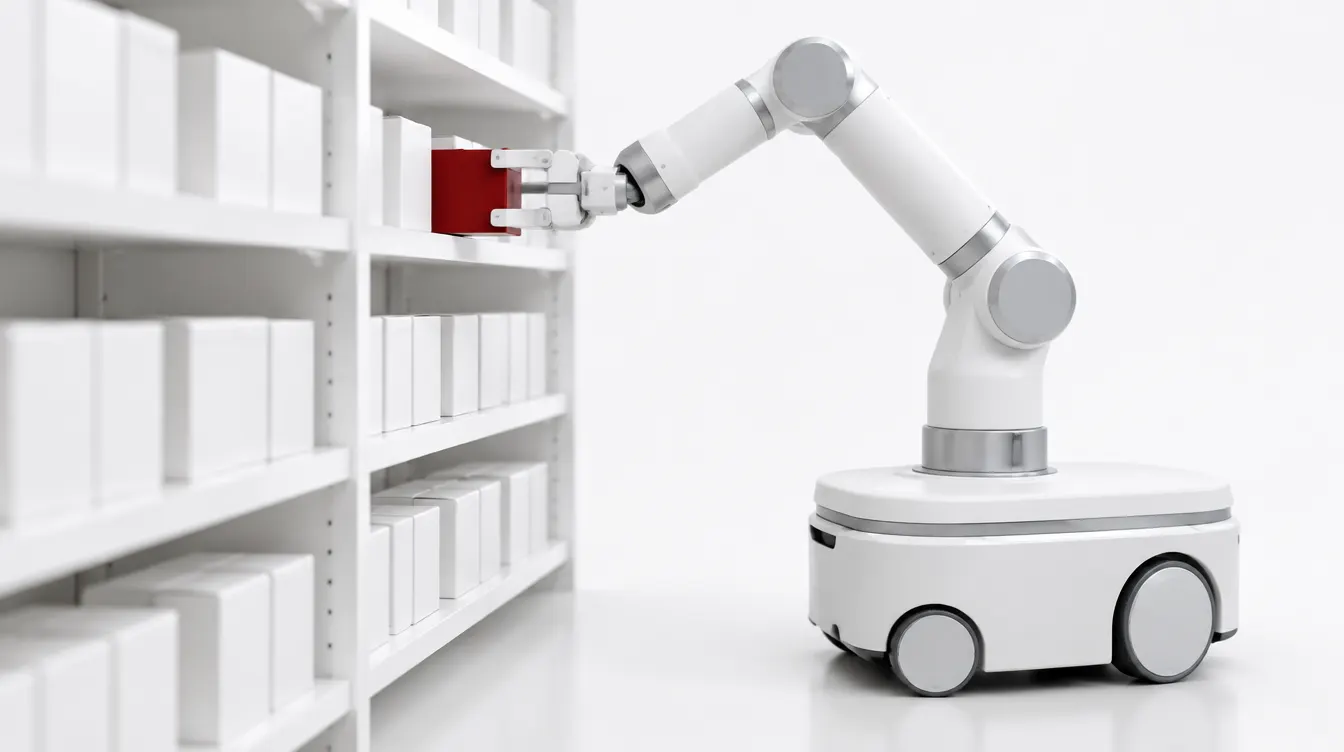
What was deployed: Galbot's G1 is a wheeled humanoid: a human-like upper body with two arms on a mobile base. In Beijing it runs round-the-clock unmanned pharmacies, picking and packing medicines and handing them to delivery couriers [62]. KrASIA reported seven such pharmacies handling more than 300 orders a day as of June 2025 [62]. A March 2026 report counted about ten in Beijing [63]. Galbot also works with Xuanwu Hospital on patient-room, pharmacy and guidance tasks [62].
What it did (the numbers, and who reported them): according to Seoul Economic Daily, one Haidian store occupies 70 m², holds up to 5,000 SKUs, handles a peak of 370 orders a day, and needs more than 50% less labour [63]. Galbot planned 100 stores across Beijing, Shanghai and Shenzhen [63]. A projected retail revenue of nearly RMB 100 million for the year is reported but unverified [62]. Grasp success claims conflict across sources: 95–97%, 99.5% and 99.95%. These figures come from the company and press coverage, not an independent audit.
What happened next: Galbot showed the G1 at IFA Berlin in September 2026 as a robot "working real pharmacy shifts". European coverage raised Chinese data and national-security-law concerns about bringing it into the EU [64]. A secondary source says Galbot is preparing an IPO at a valuation of about RMB 20 billion; we did not verify it.
What it shows: paid humanoid-type work arrived first where the environment is controlled, the task is narrow, the item set is known and the robot does not have to walk. That is the most transferable lesson in this article for Southeast Asian retail, pharmacy and back-of-house operators. It also shows that the "humanoid" label covers wheeled designs. Buyers should choose a robot's form to suit the task, whether or not it looks like a person.
Case 08Unitree: the volume business, as disclosed in an IPO prospectus
What was deployed: Unitree sells quadrupeds and humanoids, from the R1 development platform to the full-size H1. Its humanoids go mainly to research and education buyers [17]. Its humanoid "industrial" revenue comes mainly from reception and tour-guide uses, then manufacturing and inspection, and consumer and entertainment uses grew fastest in 2025 [25].
What it did (the numbers, and who reported them): Unitree's prospectus, a regulated disclosure, reports for 2025: about 5,716 humanoids produced, about 5,511 shipped and 5,215 recognised as sales. Humanoid revenue was about RMB 868 million, 51.78% of main-business revenue, against 1.88% in 2023. Total revenue was about RMB 1.70 billion, up about 335%, and 23,037 quadrupeds were sold [17][18]. Core gross margin was about 60%, and overseas revenue was more than 40% of the total [17]. Reported net profit figures conflict between filing versions and adjustments. In the first quarter of 2026 revenue rose about 68%, but adjusted net profit fell about 52% [17]. Unitree's stated five-year capacity target is 75,000 humanoids and 115,000 quadrupeds a year [18].
What happened next: Unitree priced its STAR Market IPO at RMB 150.8 a share for 40.45 million new shares, a valuation of about RMB 61 billion (about US$9 billion) [19]. Earlier coverage cited a fundraising target of about RMB 4.2 billion; the final share count and price imply about RMB 6.1 billion gross (our arithmetic). The shares debuted on 19 August 2026, opened 629% above the offer price and closed 460% above it [20]. Separately, the "UniPwn" Bluetooth flaw disclosed in September 2025 affected Unitree's Go2, B2, G1 and H1 robots; Unitree acknowledged it and promised fixes [87].
What it shows: Unitree's prospectus is the most reliable shipment and financial data in the sector, and it shows a profitable business at falling prices. The profit comes from small, low-payload research, education, reception and entertainment units. Full-size industrial humanoids remain commercially unproven. Its pricing has also squeezed Western start-ups: one report cites K-Scale Labs' chief executive saying Unitree's price cuts "erased our cost advantage", though the source is weak [13]. For operators, a low-cost Unitree is a credible platform for education, R&D or reception. It is not evidence that a factory task can be done at that price, and the UniPwn episode makes network isolation a requirement.
Case 091X NEO: a home robot that relies on remote human operators
What was deployed: 1X launched NEO on 27–28 October 2025 at US$20,000 for early-access ownership, with "priority delivery in 2026", or US$499 a month, with the subscription to ship later [65][66]. Deliveries go first to the US, with other markets from 2027 [65]. 1X openly offers "expert mode": at scheduled times a remote 1X operator, wearing a VR headset, can take control of the robot for tasks it cannot yet do autonomously [65][68].
What it did (the numbers, and who reported them): in the Wall Street Journal's launch review, as relayed by other outlets, Joanna Stern found the robot fully teleoperated by a remote "puppet master" [67]. 1X's chief executive, Bernt Børnich, frames teleoperated sessions as a "social contract": users supply the data that trains autonomy [68]. Privacy controls reported by Wired include scheduled sessions that the owner must accept, no-go rooms, face blurring, an indicator light when an operator is connected, and the ability to disconnect [69]. 1X has not published which functions are autonomous at launch.
What happened next: in May 2026, 1X confirmed it expects first private customers in the US "by the end of 2026", without a month [70]. As of our research date we found no independently verified delivery to a paying home. A claim that the first-year batch of 10,000 units sold out in five days appears only in secondary aggregation, so we do not repeat it as fact. Blog reports that the company's Hayward factory began full production on 30 April 2026 are also unverified.
What it shows: a home humanoid today is, in effect, a paid data-collection arrangement in which a remote worker takes part. That may be a reasonable trade for an enthusiast. For a hotel, a care home or a serviced residence in Singapore, it raises direct questions about consent, personal data and who is actually doing the work. Those questions should be answered in writing before any pilot.
Twelve leading companies range from demonstrations to small-scale paid production
Stages use our classification: demo, pilot, paid production, or target. "Last verified fact" is the most recent item we could tie to a named source.
| Company | Country | Flagship robot | Deployment stage (Oct 2026) | Last verified fact |
|---|---|---|---|---|
| Figure AI | US | Figure 03 | Pilot (BMW logistics sequencing; Catalyst Brands named as partner) | F.02 fleet retired 19 Nov 2025 after 11-month BMW pilot; ~150 robots shipped by mid-2026 per Activant [26][10] |
| Agility Robotics | US | Digit (v5 announced) | Paid RaaS at small scale | US$1.8m 2025 net sales; 65,000+ hours across 9 facilities; SPAC registration effective, close unconfirmed [33][32][39] |
| Apptronik | US | Apollo | Pilot (Mercedes-Benz, GXO, Jabil) | US$520m extension, Series A >US$935m, Feb 2026; large orders guided from 2027 [12][41] |
| Tesla | US | Optimus | Demo / pre-production | No verified production unit as of 20 Jul 2026; Fremont start "later this year" [43][44] |
| Boston Dynamics / Hyundai | US / South Korea | Electric Atlas | Pilot / training centre | RMAC opened 21 Sep 2026, unit count undisclosed; production use targeted from 2028 [51][50] |
| 1X | US / Norway | NEO | Pre-orders; home deliveries targeted by end-2026 | US$20,000 or US$499/month; expert-mode teleoperation disclosed [65][66] |
| Hexagon Robotics | Sweden | AEON | Pilot (BMW Leipzig) | Battery-assembly test from Dec 2025, pilot phase summer 2026 [29] |
| UBTech | China | Walker S2 | Paid orders; factory use mostly pilot / training | FY2025: 1,079 full-size units sold, RMB 821m humanoid revenue (as reported) [56] |
| Unitree | China | G1, H1, R1 | Paid production (research, education, reception) | >5,500 humanoids shipped in 2025 (prospectus); STAR listing 19 Aug 2026 [17][20] |
| AgiBot | China | A-series, others | Volume shipments; deployment metrics not published | Omdia #1 in 2025 (5,168 units); 10,000th unit 30 Mar 2026 [2][96] |
| Galbot | China | G1 (wheeled) | Paid production (pharmacies) | ~10 unmanned Beijing pharmacies; peak 370 orders/day at one store [63] |
| Diligent (Serve Robotics) | US | Moxi (not a humanoid) | Paid production (hospitals) | 25+ hospitals, ~1.25m tasks; Moxi 2.0 rollout from 17 Aug 2026 [72][74] |
Two points about the table. First, AgiBot's volume lead rests on tracker counts, and the most recent one (IDC, first half of 2026) was distributed by AgiBot itself [4]. In this research we found no independently documented production deployment of AgiBot robots with published task metrics. The same is true of most companies on the list. Second, the foundation-model companies (Skild AI, Physical Intelligence, Nvidia with GR00T, Google DeepMind with Gemini Robotics) [125][79] sell software and models rather than deployments.
Autonomy, safety evidence and cost arithmetic limit adoption
Robot "brains" improved quickly in 2025 and 2026, but the published numbers show where the limits are. Google DeepMind's Gemini Robotics 1.5 technical report scores its model at 0.83 on tasks within its training distribution. It scores 0.76 on new instructions, 0.81 on new visual scenes, 0.70 on new tasks, and 0.54 on new actions, meaning motions it was not trained on [79]. The model was offered only as a private preview. Physical Intelligence reported continuous runs of its π*0.6 model on espresso-making, laundry folding and box assembly. It says its training method "more than doubles throughput" on its hardest tasks and roughly halves the failure rate [78]. One review notes that Physical Intelligence did not publish teleoperator-intervention logs or full failure cases [78]. These are laboratory results from the developers' own set-ups. They do not measure reliability in the field.
In the field, teleoperation does two jobs. Remote operators fill gaps in what the robot can do, and their sessions are the main way companies collect training data. Tesla's 2024 event and 1X's 2025 launch both relied on remote humans [46][67]. Figure says "nothing in this film is teleoperated" of its October 2025 Figure 03 video; critics dispute that, and there is no independent verification either way [118]. No company publishes the share of field task-hours that are teleoperated. For an operator, "how autonomous is it, measured how?" is the first question to ask of any claim.
Hardware and reliability
The only detailed field reliability account is Figure's own. It took about ten months to reach full 10-hour shifts, and the forearm was the top failure point [26]. We found no verified mean time between failures, maintenance-hour or uptime figure from any customer. A secondary source puts typical humanoid battery life at one to four hours [116]. Dexterity remains the limit practitioners cite most. Rodney Brooks calls learning dexterity from human video "pure fantasy thinking", noting that human hands have about 17,000 touch receptors and that no tradition of capturing touch data exists. He predicts that successful "humanoids" in 15 years will have wheels, several arms and specialised sensors [15]. The Galbot and Moxi cases already point that way.
Safety standards and regulation
No published standard yet covers dynamically stable robots, meaning legged robots that balance actively, working near people. ISO 25785-1, for industrial mobile robots with actively controlled stability, is at committee-draft stage [80]. A working draft appeared in May 2025, with work reportedly led by a US delegation that includes A3, Agility Robotics and Boston Dynamics [81]. The core hazard is that a balancing robot collapses when power is cut, which leaves a residual fall risk. Speakers at the 2025 International Robotic Safety Conference named the lack of standards as one of the most-cited barriers to humanoid adoption [85]. Brooks advises people to keep at least three metres from a full-size walking humanoid [15].
ISO 10218-1 and 10218-2:2025, the first major revision of the industrial-robot safety standard since 2011, were published in February 2025. They assume statically stable robots and do not address humanoid balance [82]. Agility says Digit 5 is the first humanoid to pass an independent field evaluation on a customer production line against industrial safety standards administered by OSHA [36]. We found no third-party certification for cooperative work near people.
In the EU, the Machinery Regulation (EU) 2023/1230 replaces the Machinery Directive and adds duties on autonomous mobile machinery, AI-related safety functions and cybersecurity. Most sources, including Baker McKenzie, give 20 January 2027 as the date it applies, with no grace period for new products [83]. One 2023 law-firm article gives 14 January 2027 [84]. Check the date against EUR-Lex. It matters to Singapore operators because many robots sold in Asia are designed to EU conformity, and from 2027 suppliers' documentation will change.
China issued a national humanoid and embodied-intelligence standard system on 28 February 2026, in six parts including safety and ethics [93]. In the US, policy is focused on national security rather than workplace safety. The American Security Robotics Act of 2026 would bar federal agencies from buying or operating humanoids from foreign adversaries [114]. A House-passed defence bill in July 2026 contained a similar Pentagon provision, though final enactment was not confirmed [115]. We found no humanoid-specific safety regulation in Singapore. Pilots there will rely on general workplace safety-and-health duties, a documented risk assessment, and adapted machinery standards.
On incidents, we found no documented case of a humanoid seriously injuring a worker in commercial deployment during the period. The most-cited "robot injury" stories involve conventional arms or test-stand failures [88][89]. The serious open allegation is a whistleblower suit filed in November 2025 by Figure's former principal safety engineer. He alleges that testing showed Figure 02 producing enough force to fracture a human skull, and that a safety roadmap shown to investors was "gutted". Figure calls the claims "falsehoods", and none has been proven [86].
Security and privacy
UniPwn showed that a humanoid can be a networked device with a remote-takeover flaw. Hard-coded keys in Unitree's Bluetooth setup interface allowed root access from about 30 metres, and the flaw could spread between robots. Researchers say Unitree stopped responding for a period before acknowledging the issue [87]. Separate reports said the G1 sent telemetry to servers in China every five minutes without notifying the user. The specifics should be treated with caution [123]. European coverage of Galbot's IFA appearance raised the same data-jurisdiction question [64]. For home and service robots, the main privacy issue is teleoperation: a remote worker who can see and hear inside a private space [69]. In Singapore, any pilot that captures images of staff, guests or patients falls under the Personal Data Protection Act. That applies whatever the robot's form.
Economics and return on investment
We found no independently audited humanoid ROI anywhere. The published payback claims are vendor models: Agility's 1.1 years assumes 120 productive hours a week [38], and Figure's BMW metrics cover throughput and accuracy, not cost [26]. The economics depend on utilisation (Case 2), and no vendor publishes audited utilisation. Chinese hardware at a US$17,000–35,000 bill of materials could undercut cobot-plus-mobile-robot cells on capital cost [6]. However, no vendor publishes tasks-per-hour figures in a form that can be compared with humans or with fixed automation. The IFR's position is that humanoids will complement existing robot types rather than replace them [14].
Workforce and public trust
No layoffs have been publicly attributed to humanoids, and the verified Western fleet in mid-2026 was in the low hundreds, according to a secondary review [116]. Organised resistance has centred on the auto industry: the UAW in the US and Hyundai's union in Korea [100][101]. On public attitudes, an Altman Solon survey of more than 1,000 US consumers found 65% interested in owning an advanced home robot, but 69% unwilling to pay more than US$5,000, and comfort split roughly evenly [111]. A September 2026 US and UK study found only 11% very positive about humanoids, though attitudes improved after hands-on experience [112]. A Plus One Robotics survey found Americans more comfortable when trained humans monitor robots and can intervene [113]. In China, one survey reported by The Next Web found only 23% of humanoid buyers satisfied [97]. We could not examine its method. We found no Asian public-acceptance surveys on humanoids in this research. That gap matters for hospitality and healthcare operators in the region.
Asia leads on volume; Singapore is still at the testbed stage
China has treated humanoids as a strategic industry since MIIT's November 2023 guidelines. Those guidelines are often reported as targeting "mass production by 2025". A US government staff report notes that the Chinese text set a narrower goal: a preliminary innovation system and "batch" production by 2025, then humanoids used at scale by 2027 [90]. Robotics and embodied AI moved into the top-level outline of the 15th Five-Year Plan (2026–2030) [98], although we could not find numeric targets in it. Between 2025 and 2026, policy moved from public showcases towards standards and oversight. The showcases included the April 2025 Beijing half-marathon, where the winning robot took 2 hours 40 minutes and only about six of 20-plus starters finished [95]. The standards work followed: MIIT formed a humanoid standards committee in December 2025 and issued a national standard system in February 2026 [92][93]. A June 2026 MIIT and SASAC action plan reportedly targets more than 100 validated application scenarios by the end of 2026; that comes from a single secondary summary [94]. On 27 November 2025, the National Development and Reform Commission said China had more than 150 humanoid companies and warned against "highly repetitive products" crowding out R&D [91]. Headlines calling this a "rare bubble alarm" overstated the official tone.
On scale, Chinese makers accounted for about 90% of 2025 shipments by Omdia's count [2] and more than 97% in the first half of 2026 by IDC's [4]. AgiBot said it rolled out its 10,000th mass-produced unit on 30 March 2026, about three months after its 5,000th [96]. Output volume does not show how the robots are deployed, for AgiBot or for any other Chinese maker. Public-service uses, such as Hangzhou's traffic humanoids, are mostly for public display, and human officers keep the decisions [75][76].
South Korea
South Korea launched the K-Humanoid Alliance on 10 April 2025: about 40 companies and universities, with about KRW 1 trillion (about US$770 million) to 2030. Members include Rainbow Robotics (in which Samsung raised its stake to 35%), HD Hyundai Robotics, Doosan Robotics and LG Electronics. Its targets are a robot foundation model by 2028 and a humanoid of 60 kg or less [99]. Hyundai and Boston Dynamics are the region's best-capitalised humanoid effort, but the Atlas training site is in Georgia, US, and production use is targeted for 2028 [50][51]. Korean unions have already stated their conditions [100].
Japan
Japan's activity is driven by labour shortages and focuses on service and care pilots. Japan Airlines began humanoid trials at Haneda around 1 May 2026 [102]. Search summaries describe two Unitree-based robots doing baggage and cabin-cleaning tasks, but we could not verify the model or tasks against a primary source. donut robotics and Charm Care began experimental nursing-home use of the "cinnamon" humanoid in July 2026 [103]. A reported government goal of 10 million humanoids working by 2040 comes from a single trade source and is unverified.
Singapore
We found no production-scale humanoid deployment in Singapore as of mid-October 2026. The activity is government-led R&D, testbeds and private training centres.
The Home Team Humanoid Robotics Centre (H2RC) was announced by Minister Josephine Teo at HTX's AI TechXplore on 26 May 2025. It is a S$100 million facility, described as the world's first humanoid robotics facility for public safety [105]. A report dated 1 October 2026 describes it as open: a 29,000 sq ft centre, with Minister Edwin Tong speaking at the opening. Its use cases are hazmat response, post-blast investigation, prison-cell searches and ambulance restocking for the Police Force, Civil Defence Force, ICA and Prisons Service. It has a memorandum of understanding with ST Engineering and uses Singtel GPUs; no robot brands were named [106]. The timeline has slipped. In 2025 humanoids were to work alongside officers "as early as mid-2027", with autonomous versions in 2029 [107]. At the opening, the first operational humanoid was targeted "by 2028" [106].
Other activity is earlier-stage. IMDA, JTC and SIT have planned a physical-AI testbed in Punggol Digital District for delivery, cleaning and security patrol; we could not confirm it had launched [108]. YYForce, a Nasdaq-listed facilities manager, opened a robotics training, data and experience centre in Singapore on 6 October 2026, with simulated hotel housekeeping, restroom cleaning and banqueting areas. It is considering robot leasing [108]. The state-linked Shanghai Humanoid Robot Innovation Incubator plans a Singapore office and is reportedly in talks with local universities and medical institutions about pilots [110]. The National Robotics Programme's S$60 million tranche (announced in March 2024) covers manufacturing, logistics, facilities management and healthcare, and is not humanoid-specific [109]. We found no verified humanoid pilots at Changi Airport, public hospitals, F&B chains or hotels.
For Singapore operators, the main point is that the government is the lead buyer. Its earliest realistic humanoid use is public safety, from about 2028. Facilities management and hospitality are the likely private entry points. At least one state-linked Chinese incubator is courting Singapore as a regional base, which makes the security and data-jurisdiction questions above directly relevant here.
Eight steps for a pilot that starts from the task
- Start from the task and work back to the form. The paid work on record (tote moves, kitting, pharmacy picking, hospital deliveries) is narrow and structured. Two of the strongest cases, Galbot and Moxi, use wheels [62][72]. Choose a humanoid only where its form solves a real constraint, such as human-height shelving or existing workstations you cannot change.
- Treat every performance number as vendor-reported until you measure it yourself. Figure's 1,250 hours, Agility's 100,000 totes and Galbot's 370 orders a day all come from the companies or their press [26][30][63]. No customer has published an audited uptime or ROI figure.
- Measure autonomy as a rate instead of accepting the vendor's description. Ask for interventions per hour and the share of task-time under teleoperation, logged by your own systems. Demonstrations from Tesla and 1X relied on remote humans [46][67], and no vendor publishes field teleoperation shares.
- Expect a long ramp-up period and budget for it. Figure took about ten months to reach full shifts at BMW [26]. Hyundai, with a captive customer, has set aside two years of training-centre work before production [51][50].
- Calculate the utilisation needed to break even before the pilot starts. At about US$100,000 a year in rental, a robot needs more than 3,000 productive hours to beat a US$30-an-hour worker, which means close to two shifts [38]. Use local wage rates in the same calculation.
- Read order books and capacity figures for what they are. UBTech's yuan orders, Agility's US$300 million in milestone-linked orders and Hyundai's "30,000 a year" are demand signals and plans. They do not describe working robots [55][33][48].
- Make security and data handling conditions for bringing the robot on site. UniPwn and the Galbot jurisdiction debate show that a humanoid is a networked camera platform [87][64]. Isolate it on the network, control firmware updates, and settle where data goes and who can see it remotely, under the PDPA, before it arrives on site.
- Bring the workforce in early. Unions in the US and Korea are already setting conditions [100][101]. Japanese evidence suggests that robots presented as support for staff improve retention rather than displace workers [104].
A good pilot produces numbers the vendor cannot supply
| Control | What good looks like | Why, from the record |
|---|---|---|
| Task definition | One station or flow, with fixed inputs, a defined tolerance and a defined cycle target, written before the robot arrives | Figure's BMW work was a single loading task with stated targets (84 s cycle, 5 mm tolerance), but achieved values were never published [26] |
| Baseline and alternatives | Current human cost and throughput, plus a quote for a mobile robot, cobot or wheeled manipulator doing the same task | The IFR expects humanoids to complement other robot types; the best-evidenced hospital and pharmacy robots are wheeled [14][62][72] |
| Autonomy logging | Interventions per hour and teleoperated minutes, logged by systems you control, reported weekly | No vendor publishes field teleoperation shares; major demos used remote operators [46][67][78] |
| Uptime and utilisation | Scheduled hours, productive hours, downtime by cause, charging time | 1,250 hours over 11 months at BMW implies partial-day use; the ROI case needs 3,000+ hours a year [26][38] |
| Ramp-up plan | A staged schedule (shadow running, supervised, unsupervised) with exit criteria at each stage | Full 10-hour shifts at BMW came only in month ten [26] |
| Safety case | A documented risk assessment covering fall zones, separation distance, power loss and emergency stop, plus written vendor evidence against ISO 10218:2025 and the ISO 25785-1 draft | No published standard yet covers balancing robots near people; Brooks advises 3 m separation [80][82][15] |
| Maintenance and spares | Named failure points, spares held on site, mean time to repair stated in the contract | Figure named the forearm as its top failure point [26]; no customer uptime data exists |
| Cybersecurity | Robot on an isolated network segment, wireless setup interfaces disabled, firmware updates controlled, an outbound-traffic audit | UniPwn allowed wormable root takeover; telemetry to overseas servers was reported [87][123] |
| Personal data and remote access | A PDPA assessment; written terms on what is recorded, where it is stored, who can teleoperate and from where | 1X's expert mode lets remote staff see inside private spaces; data jurisdiction was raised around Galbot [69][64] |
| Commercial terms | Short initial term, payment linked to measured milestones, a clear exit, and no multi-year volume commitment until targets are met | Agility's own orders are "subject to contractual milestones"; booked sales were US$1.8m [33] |
| Supplier viability | Audited accounts or filings reviewed, plus a plan for support if the vendor fails | K-Scale Labs shut down in November 2025; Agility reported a large loss on small sales [13][35] |
| End-of-life and batteries | An agreed take-back and lithium-battery disposal route | One unconfirmed report says Figure's retired robots had to be shipped to Finland for recycling [27] |
| Workforce | Early consultation, defined roles for supervising staff, and a communications plan | Union positions at Hyundai and the UAW; staff-retention effects in Japanese care settings [100][101][104] |
| Reporting | Announced unit counts reconciled against working unit counts at each review | Dongfeng announced 20 units; a tracker reports 11 working [59][60] |
Several headline claims do not hold up against the source documents
- "Figure's robots work full-time building BMWs" is not accurate. The record shows an 11-month pilot of an undisclosed number of Figure 02 robots on one sheet-metal loading station, with 1,250 hours in total, retired in November 2025 [26].
- "Hyundai is deploying 30,000 Atlas robots" is not accurate. 30,000 a year is a production-capacity target for 2028, which Hyundai's investor day described as spanning three robot lines. As of October 2026 Atlas is at a training centre with an undisclosed number of units [48][51][52].
- "Optimus is working in Tesla factories" is not accurate. Musk said in January 2026 that no Optimus robot was doing useful work, and no production unit had been disclosed by July 2026 [42][43].
- "Agility has US$300 million in Digit sales" is not accurate. The filings describe US$300 million-plus of multi-year orders subject to contractual milestones, against US$1.8 million of 2025 net sales [33].
- "Digit costs US$30 an hour" is not accurate. US$30 is the fully loaded human wage Agility benchmarks against. Reported rental is about US$8,500 a month [38].
- "China targeted mass production of humanoids by 2025" is not accurate. The MIIT text set a preliminary innovation system and narrower "batch" production by 2025, with scaled use by 2027 [90].
- "The US$5,900 Unitree is a working humanoid" is not accurate. The R1 is a 1.2 m, about 25 kg development platform. Full-size units cost several times more [22][23].
- "A Tesla robot injured a worker" (the US$51 million case) does not involve a humanoid. The case concerns a conventional FANUC industrial arm [89].
- "A Unitree robot attacked its handlers" is not accurate. The video shows a control-policy failure while the robot hung from a test crane [88].
- "Robot traffic police in China enforce the law" is not accurate. The Hangzhou robots issue warnings and guide pedestrians, and enforcement stays with human officers [76].
- "1X NEO is an autonomous home robot" is not accurate. 1X discloses remote expert-mode operation, and the launch review found it fully teleoperated [65][67].
- "AgiBot (or Unitree) is the undisputed number one" is not accurate. Omdia ranks AgiBot first for 2025; Unitree's prospectus claims first place. The latest IDC graphic was distributed by AgiBot [2][3][4].
- "China's planner issued a rare bubble alarm" overstates the official tone. The NDRC warned against "highly repetitive products" and urged balance between speed and bubbles [91].
Most of the major claims can be tested by 2028
| Date | Milestone | What to look for | Source |
|---|---|---|---|
| Late Oct 2026 | Tesla Q3 2026 results | Whether Fremont Optimus production has started, with a unit count | [44] |
| Q4 2026 (pending) | Agility–Churchill Capital XI SPAC vote and close | Redemption level and cash raised; ticker AGLT | [34][39] |
| By end-2026 | 1X NEO first customer deliveries (US) | Independently verified deliveries to paying homes; share of autonomous tasks | [70] |
| End-2026 | UBTech 2026 output target (5,000 units; some reports say 10,000) | Actual deliveries in the 2026 annual results | [57][119] |
| Jan 2027 onwards | Full-year 2026 shipment counts from IDC, Omdia and others | Range against BofA's 90,000 forecast | [6] |
| 20 Jan 2027 (one source: 14 Jan) | EU Machinery Regulation 2023/1230 applies | Supplier conformity documentation, including cybersecurity | [83][84] |
| Early 2027 (filings: early access H1 2027) | Digit 5 commercial availability | Cooperative-safety evidence; first v5 sites | [36][33] |
| 2027 | Apptronik's guided ~US$1bn of orders | Signed, disclosed contracts | [41] |
| Summer 2027 | Tesla Giga Texas Optimus factory | Start of production | [42] |
| Late 2027 | Optimus for private customers (Musk, Davos) | Any consumer sale | [47] |
| Not dated | ISO 25785-1 publication | Move from committee draft to published standard | [80] |
| 2028 | Hyundai Atlas production use at Metaplant (parts sequencing) | Unit count and task metrics | [50][52] |
| 2028 | Singapore HTX first operational humanoid | Named robot, task and agency | [106] |
| 2030 | Hyundai Atlas component assembly; BofA ~1m+ annual shipments | Progress against plan | [50][6] |
In thirty-four months, humanoids moved from demonstration videos to the first stock listings
| Date | Event | Stage | Source |
|---|---|---|---|
| Feb 2024 | Figure Series B: US$675m at US$2.6bn | Capital | [9] |
| Mar 2024 | Singapore announces S$60m National Robotics Programme tranche (not humanoid-specific) | Policy | [109] |
| Mar 2024 | Mercedes-Benz–Apptronik pilot agreement (date per most sources) | Pilot | [40] |
| 2024 | Unitree G1 launched at RMB 99,000 | Product | [23] |
| Oct 2024 | Tesla "We, Robot": Optimus interactions overseen by remote operators | Demo | [46] |
| Feb 2025 | ISO 10218-1/-2:2025 published | Standard | [82] |
| Mar 2025 | UBTech Walker S1 "group training" at Zeekr; Dongfeng Liuzhou announces 20 units | Pilot | [58][59] |
| Apr 2025 | Beijing humanoid half-marathon: winner 2h40m; ~6 of 20-plus finish | Demo | [95] |
| 10 Apr 2025 | South Korea launches K-Humanoid Alliance | Policy | [99] |
| 26 May 2025 | Singapore announces S$100m Home Team Humanoid Robotics Centre | Policy | [105] |
| 6 Jun 2025 | Tesla Optimus engineering head Milan Kovac leaves | Company | [45] |
| Jun 2025 | Galbot runs 7 unmanned pharmacies in Beijing | Paid production | [62] |
| 25 Jul 2025 | Unitree R1 launched at RMB 39,900 | Product | [22] |
| Sep 2025 | Figure Series C at US$39bn post-money | Capital | [9] |
| 20 Sep 2025 | UniPwn vulnerability in Unitree robots disclosed | Security | [87] |
| 27–28 Oct 2025 | 1X launches NEO at US$20,000 or US$499/month; launch review finds it teleoperated | Pre-order / demo | [66][67] |
| Mid-Nov 2025 | UBTech begins Walker S2 mass delivery; orders >RMB 800m | Paid orders | [54] |
| Nov 2025 | Figure whistleblower suit filed | Legal | [86] |
| 19 Nov 2025 | Figure retires F.02 fleet after 11-month BMW pilot | Pilot ends | [26] |
| ~20 Nov 2025 | Agility: 100,000 totes moved at GXO | Paid production | [30] |
| 27 Nov 2025 | China's NDRC warns of bubble risk among more than 150 firms | Policy | [91] |
| Dec 2025 | BMW Leipzig begins Hexagon AEON test | Pilot | [29] |
| Jan 2026 | Omdia: 13,318 humanoids shipped in 2025; IDC: ~18,000 | Data | [2][1] |
| Jan 2026 | Musk: no Optimus doing useful work in Tesla factories | Company | [42] |
| Jan 2026 | Production-ready Atlas at CES; Hyundai plans 30,000/yr by 2028 | Target | [48][49] |
| Jan 2026 | Serve Robotics agrees to acquire Diligent (Moxi) | Corporate | [72] |
| 11 Feb 2026 | Apptronik US$520m extension | Capital | [12] |
| 28 Feb 2026 | China issues humanoid and embodied-intelligence standard system | Standard | [93] |
| Mar 2026 | BofA forecasts 90,000 shipments in 2026 | Forecast | [6] |
| 30 Mar 2026 | AgiBot's 10,000th mass-produced unit | Production | [96] |
| 31 Mar 2026 | UBTech FY2025: 1,079 full-size units sold (as reported) | Results | [56] |
| Mid-Apr 2026 | Foxconn plans fewer than 10 humanoids on a Houston server line | Pilot | [71] |
| 22 Apr 2026 | Tesla targets Fremont Optimus start in Jul–Aug 2026 | Target | [42] |
| 1 May 2026 | Hangzhou deploys 15 traffic humanoids; JAL begins Haneda trials | Pilot | [75][102] |
| May 2026 | 1X confirms first US customers "by end of 2026" | Target | [70] |
| 24 Jun 2026 | Agility agrees US$2.5bn SPAC merger | Capital | [34] |
| Jul 2026 | donut robotics "cinnamon" begins nursing-home trials in Japan | Pilot | [103] |
| 22 Jul 2026 | Tesla moves Fremont start to "later this year" | Target | [44] |
| Aug 2026 | IDC: almost 25,000 shipped in H1 2026; Smart Analytics: ~19,100 | Data | [4][5] |
| 17 Aug 2026 | Diligent begins Moxi 2.0 rollout | Paid production | [74] |
| 19 Aug 2026 | Unitree lists on STAR Market; closes +460% | Capital | [20] |
| 15 Sep 2026 | Agility unveils Digit 5 for cooperatively safe work | Product | [36] |
| 21 Sep 2026 | Hyundai RMAC Atlas training centre opens in Georgia | Pilot | [51] |
| Oct 2026 (reported 1 Oct) | Singapore H2RC opens; first operational humanoid targeted by 2028 | R&D | [106] |
| 6 Oct 2026 | YYForce opens Singapore robotics training centre | Private pilot | [108] |
Answers to common questions
- Are humanoid robots doing real paid work anywhere? Yes, but in narrow tasks and small numbers. Agility's Digits move totes at GXO under a commercial arrangement [30]. Galbot's wheeled robots run paid pharmacies in Beijing [63]. Unitree sells thousands of units for research, education and reception [17]. We found no disclosed deployment of more than tens of humanoids at a single site.
- Is a humanoid cheaper than a person yet? Not on any audited evidence. Vendor models claim payback in one to two years, but only at high utilisation [38]. On a rental of about US$100,000 a year, the robot needs more than 3,000 productive hours to beat a US$30-an-hour worker. In Singapore, use your own wage and shift data and run the same calculation.
- Is a humanoid safe to work alongside our staff? No published standard yet covers balancing robots near people. ISO 25785-1 is still a draft [80]. Treat vendor "cooperatively safe" claims as the vendor's own assertions, supported by its own evidence. They are not certifications. Design the pilot with separation distances and a documented risk assessment [15][36].
- Do Chinese robots raise security issues? Any networked robot with cameras does. The documented case, UniPwn, involved Unitree robots [87]. Galbot's European launch raised data-jurisdiction concerns [64]. Treat every robot, from any country, as an untrusted network device until it is tested.
- When will humanoids be common in Singapore? The government's own target is a first operational Home Team humanoid by 2028 [106]. We found no production-scale private deployment as of October 2026. Facilities management and hospitality training centres opened in October 2026 [108].
- Is a humanoid the right form for our task? Often it is not. The best-evidenced hospital and pharmacy robots, Moxi and Galbot, run on wheels [72][62]. Brooks expects successful "humanoids" to drift towards wheels and specialised arms [15]. Choose the form after defining the task.
- Who are the safest vendors to pilot with? That depends on the task and the support available locally. Prefer vendors that publish regulated financials (prospectuses, SEC or HKEX filings), will contract on measured milestones, and allow independent logging of autonomy and uptime. That standard applies equally to every vendor in this article, including AgiBot, which Orion Five integrates.