Systems integration
Model the line before you automate it. ISO 23247 just got the part that makes that practical
A digital twin is only useful if it can be trusted, and until this year the international standard for manufacturing digital twins was missing the part that says how one is actually composed. ISO 23247 got that part in 2026.
Executive summary
2021
ISO 23247 Parts 1–3 (overview, architecture, digital representation) published
2026
Part 6 (digital twin composition) published, the part defining how a twin is actually assembled
Core conclusions
- A digital twin's first job is to let you rehearse the automation decision against a model that behaves like the real line, before the capital is committed.
- ISO 23247 Part 6 defines three composition models (integrated, unified, federated) and the choice has to match the estate it describes.
- Ask a digital-twin proposal which composition model it is built on and why.
Committing capital to an autonomy project on a line you have only ever seen running is a bet on your own memory of how it behaves under load, at the edges of a shift, and on the days something is already slightly wrong. A digital twin, a live, data-fed model of the physical asset, exists to remove that bet, and it only became fully standardised this year.
ISO 23247 is the international framework for digital twins in manufacturing. Parts 1 through 3 (the overview, the reference architecture, and the digital representation) were published in 2021 and set the vocabulary. Part 5, the digital thread, and Part 6, digital twin composition, followed in 2026, and Part 6 is the one that matters for planning: it defines how twins are actually assembled, as integrated, unified or federated models, so that decision no longer falls to whichever vendor is selling the software.
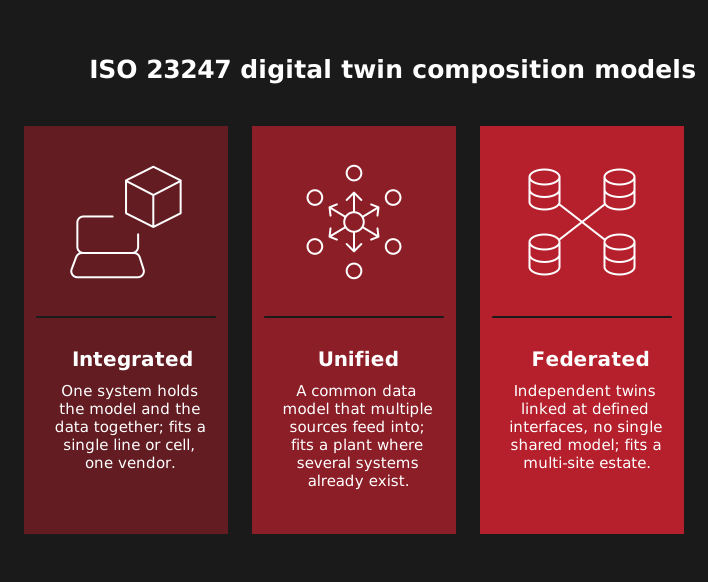
ISO 23247's three composition models
| Model | How it's built | Where it fits |
|---|---|---|
| Integrated | One system holds the model and the data together | A single line or cell, one vendor, no need to federate across systems |
| Unified | A common data model that multiple sources feed into | A plant where several systems already exist and need to agree on one representation |
| Federated | Independent twins linked at defined interfaces, no single shared model | A multi-site estate where sites won't standardise on one platform, and shouldn't have to |
The planning use, not the automation use
The twin's first job is to let you rehearse the automation decision (the failure modes, the edge cases, the sequencing) against a model that behaves like the real line, before the capital for the real thing is committed.
That only works if the twin's composition model matches the estate it describes. A federated model bolted onto a single line adds integration overhead for no reason; an integrated model stretched across a multi-site estate breaks the moment the sites disagree on a data definition. ISO 23247 Part 6 exists so that choice gets made deliberately, against a published framework, instead of by whichever platform's sales team got in the room first.
The falsifiable version: ask a digital-twin proposal which of the three ISO 23247 composition models it is built on, and why that one fits your estate better than the other two. A proposal that has not considered the question has not yet designed the twin.